The most beautiful tables are rarely the most perfect. They are the ones no one wants to leave.
There is a particular moment at a French table when dinner becomes something else entirely.
The plates have been cleared, but no one rises. A little wine remains in the glasses. Candles have begun to burn unevenly. Someone reaches across the table for the last piece of bread. Conversation wanders from the important to the wonderfully inconsequential, and the evening seems, for a while, to have forgotten about time.
This may be the true art of the French table.
It is the art of creating a table at which people wish to remain.
And perhaps, in a world increasingly concerned with how a table looks, there is something quietly radical about remembering how we want it to feel.
A Table Is an Invitation
The French have long understood that entertaining is not simply a matter of feeding people.
It is a way of receiving them.
There is a difference.
To receive someone is to consider the evening from their point of view: the first glass offered on arrival, the chair they will settle into, the light falling across the room, the pace at which one course gives way to another.
The table begins before anyone sits down.
A cloth is unfolded. Glasses catch the late-afternoon light. Flowers are cut low enough that conversation can travel easily across them. A bottle waits to be opened. Bread is placed where hands can reach it without ceremony.
None of it need announce itself.
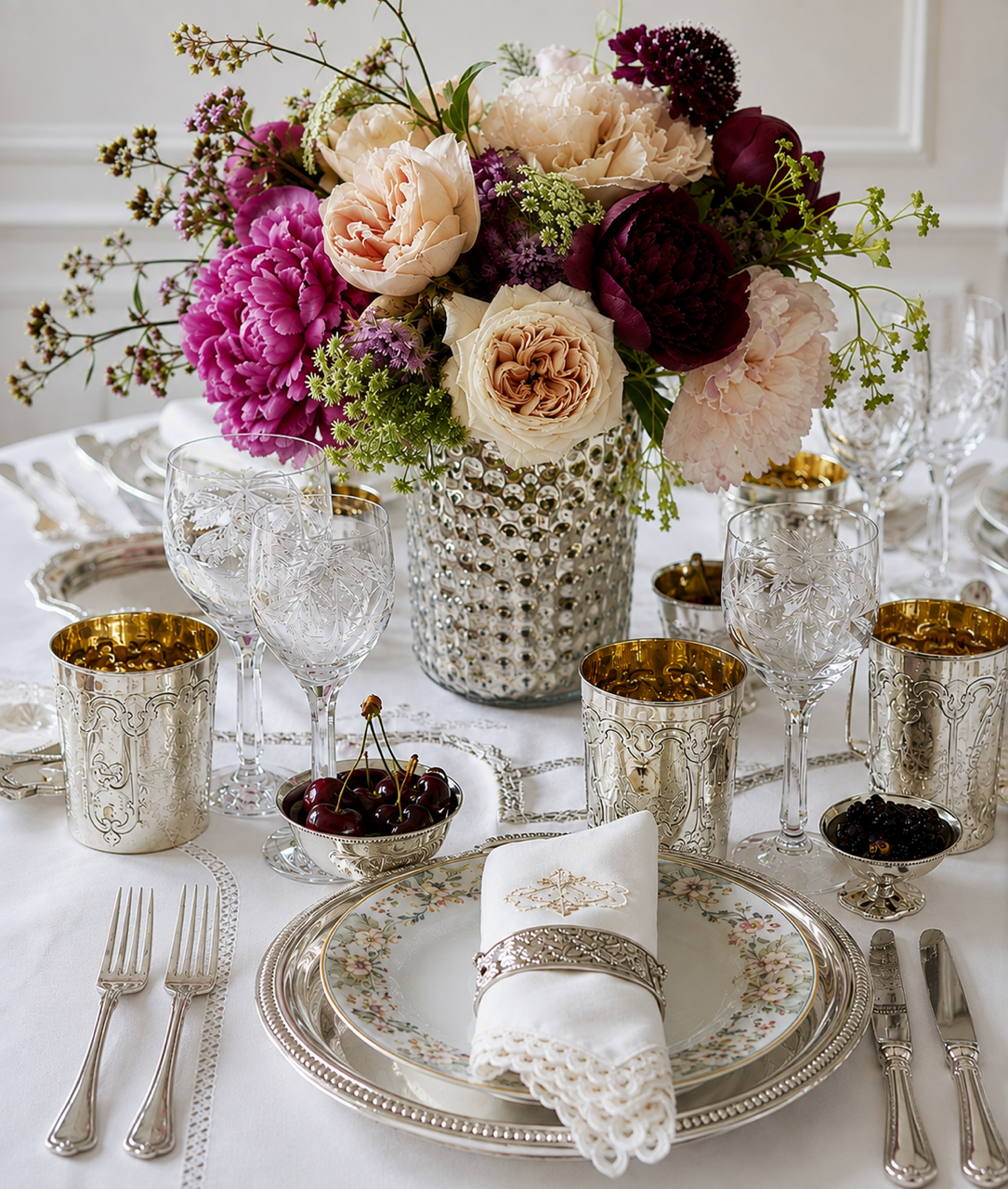
Indeed, the most compelling French tables often possess a kind of studied nonchalance. A linen cloth may remain softly creased. Antique silver sits happily beside everyday ceramics. Garden roses lean imperfectly from a small vase. A treasured platter appears again and again, acquiring memories along with its fine scratches and chips.
The effect is elegant precisely because it does not seem to be trying too hard.
The Luxury of Things Chosen Well
There is a temptation, when setting a beautiful table, to add.
Another candle. Another arrangement. Another layer of decoration.
The French instinct is often more discerning: choose fewer things, but choose them well.
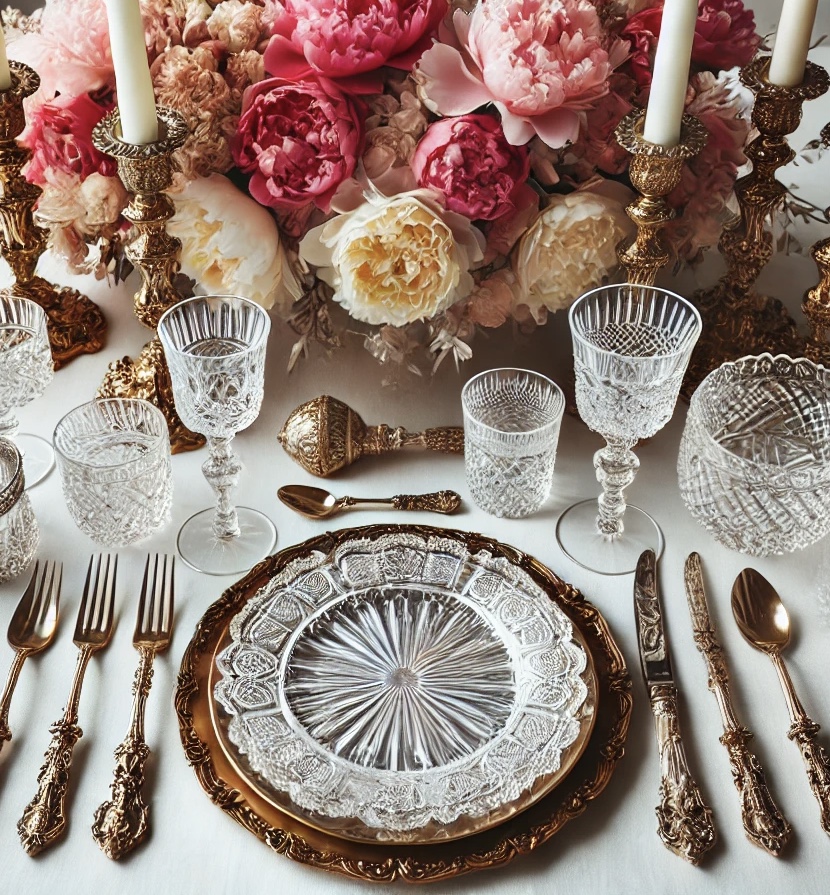
A beautiful table might begin with linen possessing the weight and softness that only improves with washing. Perhaps hand-painted plates from a small atelier. Fine, almost impossibly thin glassware. A knife that feels pleasingly substantial in the hand. A serving bowl found years ago in Provence.
These objects do more than decorate.
They participate.
This is where craftsmanship becomes particularly meaningful. When we use something made by hand—a piece of faience, embroidered linen, mouth-blown glass, a silver serving piece—we become aware of the person behind the object.
The slight irregularity becomes part of its beauty.
And gradually, a table assembled in this way becomes deeply personal. It cannot be purchased in a single afternoon because it has been collected rather than coordinated.
Old beside new. Precious beside simple. Inherited beside discovered.
The result is not a tablescape.
It is a life, laid upon a table.
Begin With the Cloth
If there is one element capable of changing the mood of a table almost instantly, it is linen.
There is something wonderfully generous about a tablecloth falling towards the floor or a stack of freshly pressed—or intentionally unpressed—napkins waiting beside each plate.
White is eternal, but not obligatory.
Washed flax, faded blue, soft butter, chalk, oyster and the palest blush all possess the quietness that allows everything placed upon them to breathe.
For a relaxed déjeuner, linen can be left naturally rumpled. For dinner, a more formal cloth immediately changes the rhythm of the room.
And there is no need to reserve beautiful linen for important occasions.
That may be one of the loveliest lessons of French domestic life: use the beautiful things.
The embroidered napkins.
The glasses that feel too delicate.
The china inherited from a grandmother.
Objects kept permanently behind cupboard doors cannot become part of our memories.
Let the Table Breathe
A French table rarely needs a grand floral centrepiece.
A few branches of blossom may be enough. A handful of garden roses. Sweet peas tumbling from a small vessel. Herbs cut from the kitchen garden. In autumn, perhaps pears, figs or artichokes arranged almost as if they had simply been left there.
The important thing is proportion.
Flowers should belong to the table rather than dominate it.
Keep arrangements low. Repeat small vessels rather than relying upon one imposing centrepiece. Allow empty space between objects.
That space is important.
It leaves room for bread baskets and wine bottles, for serving dishes arriving from the kitchen, for elbows resting comfortably on the table as dinner grows less formal.
A table should be beautiful at seven o’clock.
It should be even more beautiful at eleven, when it has become gloriously undone.
Candlelight Changes Everything
There are few decorating decisions with a greater return than lighting a candle.
Or six.
Candlelight softens a room, flatters old silver and turns even a simple supper into an occasion. Tall tapers bring elegance; smaller candles scattered along a table create intimacy.
The secret is not to save them.
Light them before guests arrive. Let the wax run. Allow the candles to become part of the evening rather than pristine objects intended for another, more deserving occasion.
The same principle applies to the room itself.
Turn down overhead lighting where possible. Light a lamp in the corner. Leave another room softly illuminated beyond the dining room.
Atmosphere rarely comes from one dramatic gesture.
It is built from small pools of light.
The Menu Should Allow the Host to Disappear From the Kitchen
Perhaps the least elegant dinner party is the one at which the host is never present.
French entertaining offers a useful correction to the contemporary ambition to impress through complexity.
Cook something you know.
Choose food that can wait for people rather than food that makes people wait for it.
A beautiful pâté, radishes with butter and salt, a tart brought to the table still in its dish, roast chicken surrounded by herbs, potatoes crisp from the oven, a green salad dressed at the last moment.
Then cheese.
Then perhaps a fruit tart, chocolate mousse, madeleines or simply perfect summer peaches.
Generosity does not require abundance.
Often, one beautifully prepared dish has more presence than five elaborate ones.
The purpose of dinner, after all, is not to demonstrate what the host can accomplish.
It is to bring everyone together.
Wine Is Part of the Conversation
There is a lovely ease in the French approach to wine when it is treated not as a performance of knowledge, but as part of the meal.
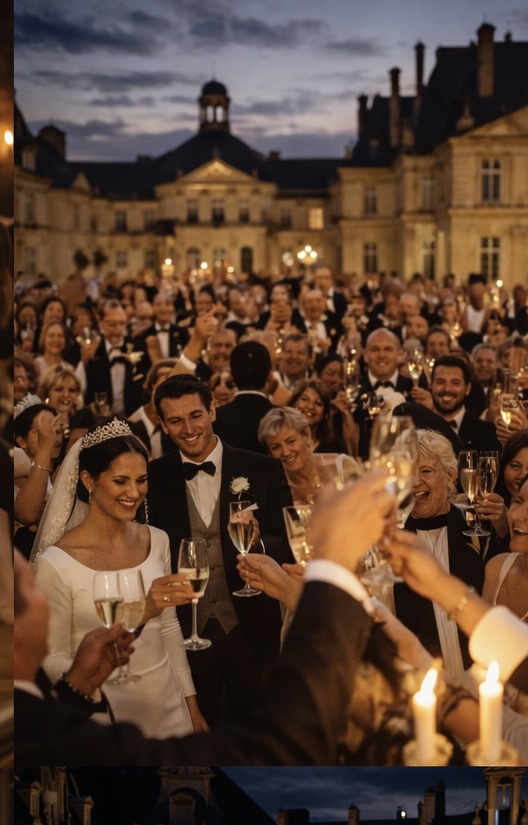
A bottle might have been chosen because it comes from a place the host loves. Another because a trusted caviste suggested it. Champagne might begin the evening simply because Tuesday became worth celebrating.
The story behind what is poured can be as pleasurable as the wine itself.
This is true of many things at the table.
The olive oil brought home from a journey.
The salt made along a particular coastline.
The cheese from a small producer.
The hand-painted plate discovered in an atelier whose door happened to be open one afternoon.
Such details give an evening texture.
They also give guests something irresistible: a story to take away.
Perfection Is Not the Point
Perhaps this is the most important rule of all.
Something will go wrong.
The soufflé may fall. Someone will arrive late. A glass may break. The dog may appear at precisely the wrong moment. The candles will drip onto the tablecloth you had hoped to keep immaculate.
Let them.
The host determines the emotional temperature of a gathering. If you are relaxed, your guests understand that they may be relaxed too.
This may explain why the tables we remember most fondly are seldom flawless.
We remember the dinner that migrated outdoors because the evening was unexpectedly warm. The bottle opened after everyone had promised they were leaving. The dessert eaten directly from its serving dish. The friend who stayed in the kitchen talking while the plates were stacked beside the sink.
Hospitality becomes memorable when it leaves room for life to happen.
The Table After Dinner
There is a photograph worth taking at the beginning of dinner.
There is another, perhaps more beautiful one, at the end.
Napkins have slipped from laps onto chairs. Wine glasses stand at different levels. A serving spoon has been abandoned beside a nearly empty dish. Candle wax has travelled down brass holders. Flower petals have fallen onto the cloth.
It is no longer a perfect table.
It is evidence of a good evening.
This is the image we return to when thinking about l’art de la table: not a pristine arrangement waiting to be admired, but a table transformed by the people around it.
Because the finest porcelain will never make an evening memorable on its own.
Nor will the rarest wine.
Nor the most exquisite flowers.
What we are really creating when we entertain is a place for something intangible to occur.
Conversation.