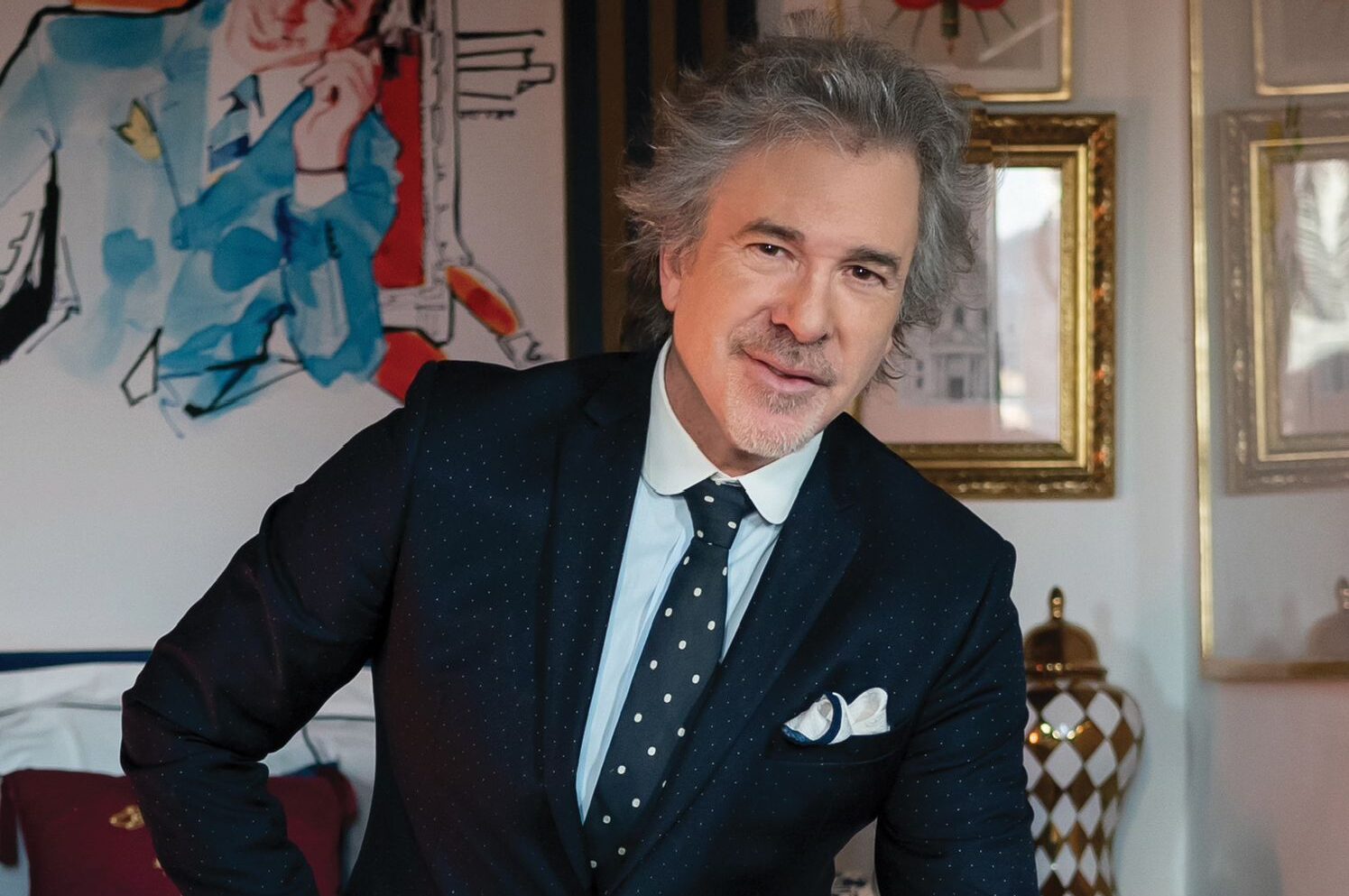
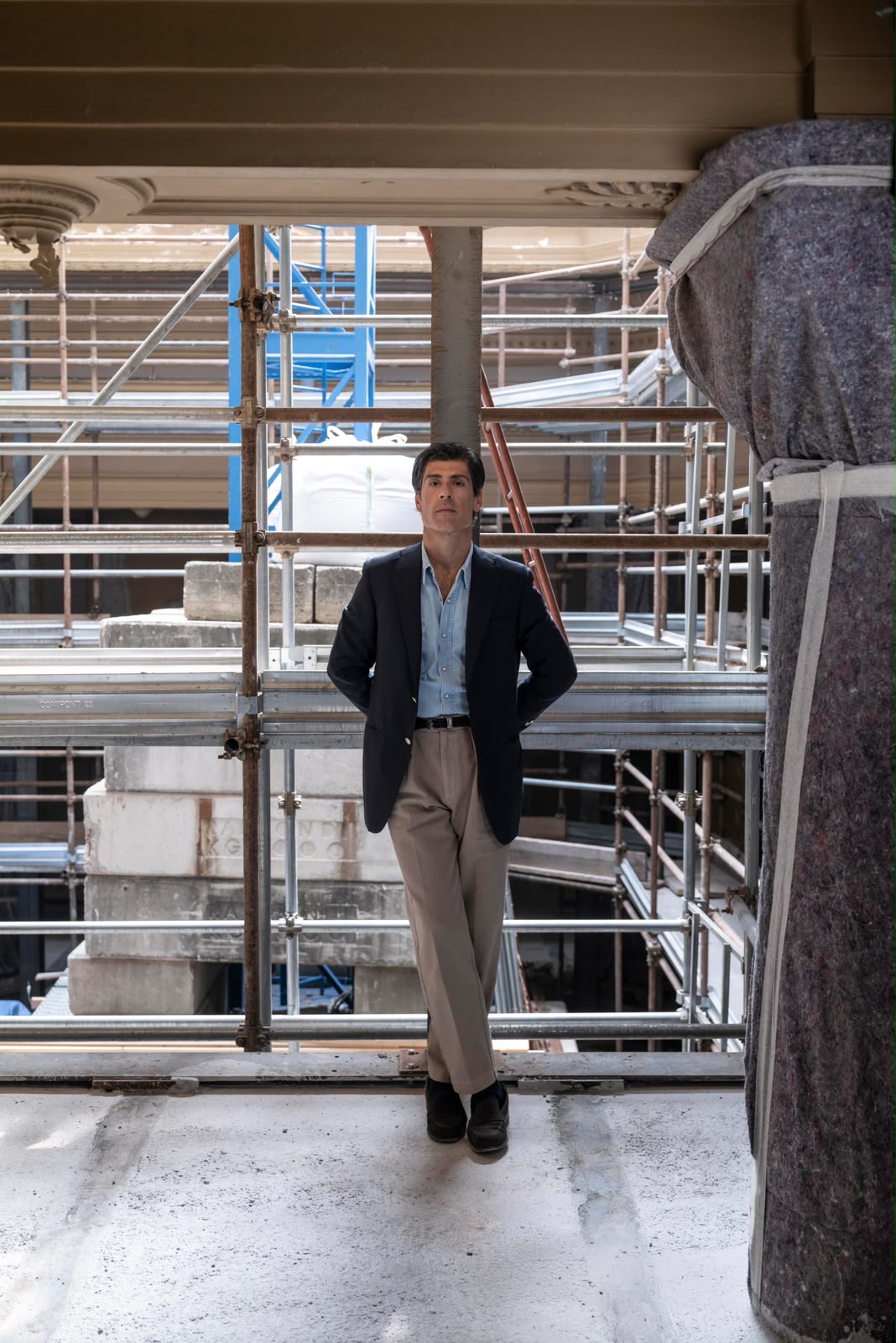
On Turin, old buildings and giving a city back its life
There is a moment, when speaking with Edoardo Follo, when the language of property development rather suddenly disappears.
We have been talking about buildings — about façades, natural light, courtyards, restoration and the practical realities of converting structures that were never intended for twenty-first-century domestic life — when Follo begins to describe what happens after an abandoned building is brought back into use.
First, the building changes.
Then the street changes.
People return. Shops open. Windows are illuminated again. A place that had ceased to participate in the life of the city begins to belong to it once more.
For Follo, this is the point.
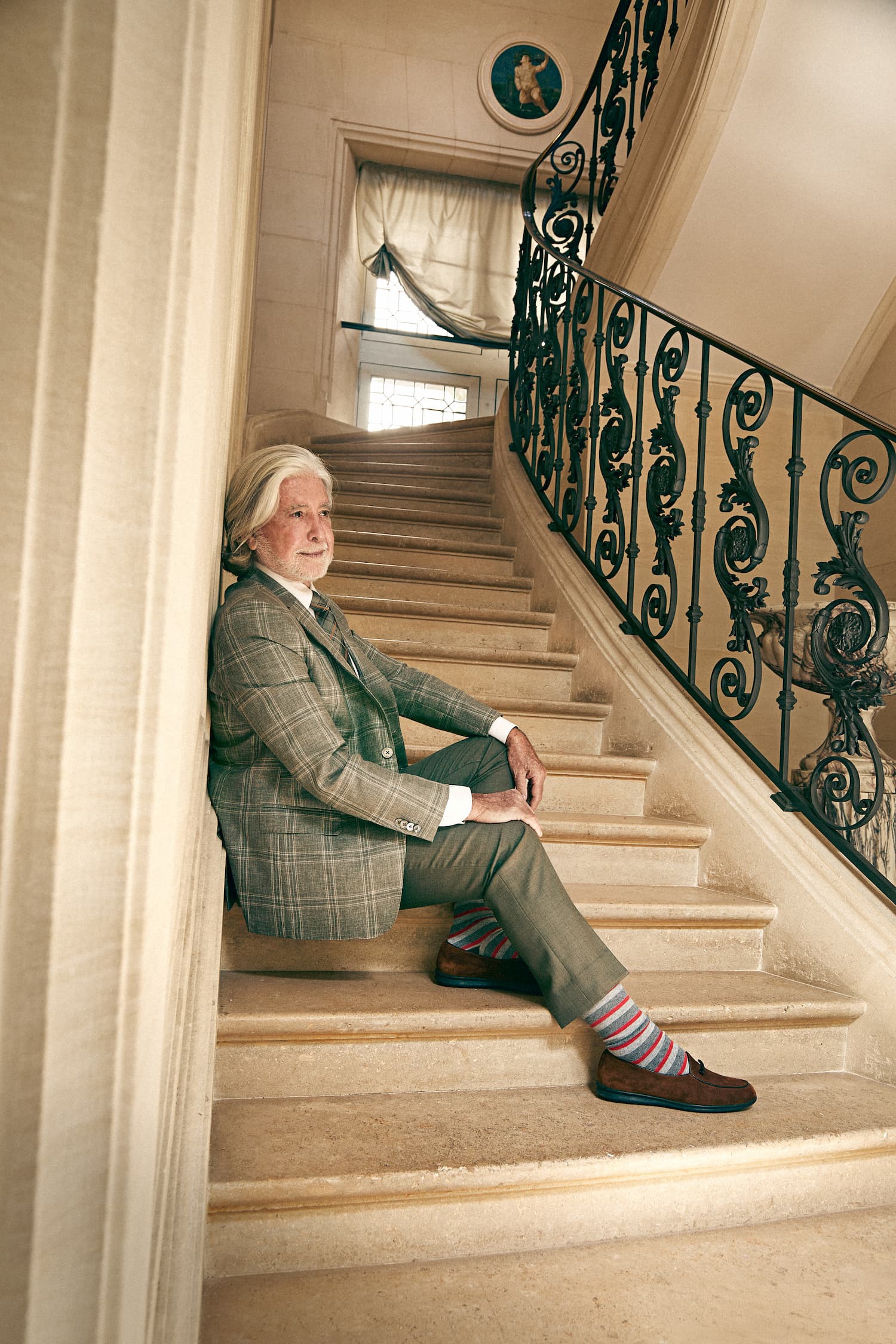
An architect and co-founder, with fellow architect Andrea Delmastro, of Turin-based Vertico, Edoardo belongs to a family already familiar with bricks and buildings. Both his father and grandfather worked in real estate and construction in Turin.
His own route began with architecture. After completing his studies, he left Italy for Madrid and then Monaco, where an education of another kind began: alongside architecture came the economics of real estate and exposure to a radically different visual landscape.
Monaco, in particular, was full of modern architecture — a striking contrast to the historic buildings of Turin.
Somewhere between those two worlds, an idea began to form: the contemporary and the historic did not necessarily have to exist in opposition.
By the time he returned to Turin in 2021, Follo was increasingly interested in how the two might be brought together.
It is a philosophy that now runs through Vertico’s work.
And it has placed Edoardo Follo at the centre of some particularly intriguing transformations in his native city.
A Turinese eye
Turin is an appropriate city in which to develop an obsession with what lies behind a façade.
Its beauty is rarely obvious in the way that Rome or Venice announces itself. Turin is more restrained. Porticoes lead to courtyards; comparatively austere façades conceal remarkable interiors; grand rooms appear where one least expects them.
When we ask Follo which part of the city he feels particularly attached to, he mentions Borgo Po, close to the centre, and the centre of Turin itself.
But increasingly, his relationship with the city is expressed through the buildings he chooses to bring back into use.
When Follo and Delmastro first consider a historic property, there is a clear order to the process.
“Restoration first and then renovation.”
Before deciding what can be added, they establish what deserves to remain.
They work closely with the Soprintendenza, Italy’s heritage authority, particularly where buildings have been placed under protection.
“We work by seeing what is worth preserving and then we design what is new,” Follo explains.
But there is another ambition behind the process.
“We want to give back to the city of Turin — and be part of its Renaissance.”
It is a word he uses quite deliberately.
Turin, Follo believes, has undergone a revival over recent years. Visitors have arrived in numbers that would once have seemed unusual; parts of the city have been rediscovered; and there remain numerous buildings waiting for another chapter.
Sometimes, that new chapter requires not simply restoration but an entirely new purpose.
Palazzo Alfieri is perhaps the most dramatic example.
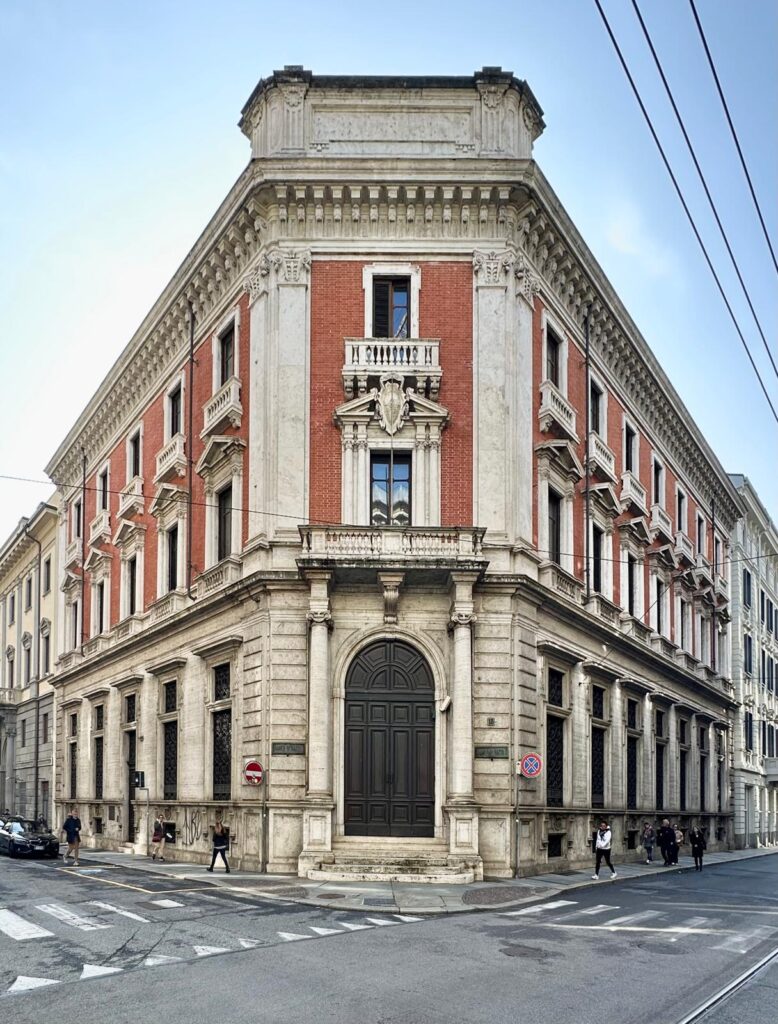
Images Courtesy of Edourdo Follo
Falling for Palazzo Alfieri
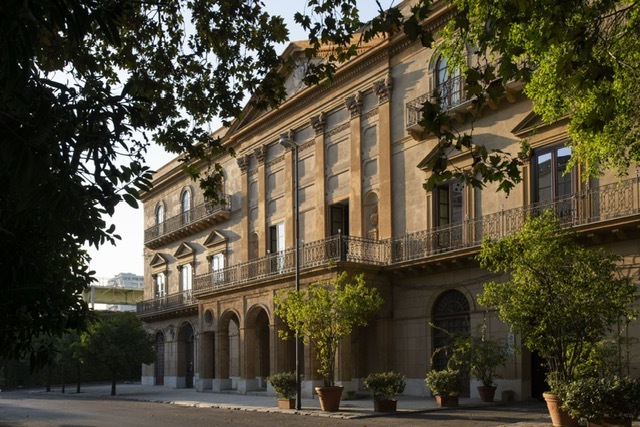
The former Banco di Napoli building sits at the corner of Via Vittorio Alfieri and Via dell’Arsenale, only a short distance from Piazza San Carlo, in the historic heart of Turin.
When Follo and Delmastro first walked inside, having been called by an estate agent to take a look, the reaction was immediate.
They fell in love with it.
Follo already knew the exterior had possibilities. But inside, despite years of abandonment and later interventions, the fundamentals were still there.
“The light and the proportionality were already there.”
There were soaring spaces, monumental columns and marble.
There were also modern materials layered over the original architecture — some inappropriate and, Follo says, in certain cases potentially unhealthy.
The restoration therefore developed around a rather beautiful principle: allow the building itself to regain the upper hand.
“The original materials should speak.”
“The new materials should remain discreet.”
It is a revealing idea because it explains much of Follo’s approach. The contemporary intervention is not there to compete with the architecture it inherits.
Yet preservation does not mean timidity.
At Palazzo Alfieri, Vertico made the bold decision to remove an existing roof covering in order to open an internal courtyard and allow far more natural light into the future residences.
For Follo, the reasoning is characteristically pragmatic.
“When we start to think about the building, we think about the structure and how to add value to the space.”
Residential architecture, he says, needs as much natural light as possible.
And in some of the resulting apartments, the intervention will create something genuinely rare in the centre of Turin: the possibility of a private garden.
History, in other words, is not being frozen.
It is being made inhabitable again.
Beneath the palazzo
And then there is what lies underneath it.
Descending beneath Palazzo Alfieri means entering another chapter of Turin altogether.
Behind reinforced concrete are spaces associated with the former Banco di Napoli — passages, heavy doors and protected rooms that seem almost severed from the elegant city above.
Follo remembers the first encounter vividly.
“It felt like a movie. It was surreal.”
But the initial theatricality quickly gave way to something more serious.
“It is part of Turin’s history.”
And for that reason, the underground spaces have not simply been stripped out or disguised.
The project has generated remarkable interest, particularly around the possibility of creating a private anti-atomic bunker within the complex. Enquiries, Follo tells us, have come from potential international purchasers, including from the Middle East.
Yet what is perhaps more revealing is that Vertico is also considering occasionally allowing the public below ground.
“There is a possibility we will make it accessible to the public once or twice a year.”
It is an intriguing contradiction: an intensely private space that Follo nevertheless recognises as belonging, in some way, to the history of Turin itself.
A city should not become a museum
The most revealing part of our conversation comes when we ask Follo about the responsibility of intervening in buildings that existed long before him.
He and Delmastro are architects, certainly, but they are also developers — and Follo is refreshingly straightforward about that combination.
“We studied architecture and we are developers.”
Two principles sit at the centre of Vertico’s work: functionality and pragmatism.
But neither, in Follo’s mind, is opposed to conservation.
Quite the contrary.
“For us it is key that every historical building that we restore is an act of urban regeneration. Our vision is to give back to the city.”
And then he describes the chain reaction.
Bring a building back to life and the street begins to change with it.
The atmosphere changes.
Residents return. Commercial life follows. A structure which may have stood empty begins participating in the city once again.
A building, Follo believes, can be repurposed without losing itself.
A bank may become residences. A disused commercial building may become somewhere to live. Its function can change completely without the architecture that gives it identity being erased.
And then comes perhaps the sentence that best explains his philosophy:
“Beautiful cities do not need to be museums.”
They need life.
They need people.
The purpose of preserving architecture cannot simply be to create perfect, untouched monuments emptied of ordinary existence.
Follo enjoys, as he puts it, bringing back — reviving — the spirit of a city.
Head and heart
Of course, romance with old buildings has its limits.
We ask him the inevitable question.
Has he ever fallen hopelessly in love with a building that made absolutely no financial sense?
It happens.
Fortunately, Follo and Delmastro have one another.
If one begins to become rather too enamoured with the possibilities of a building, the other can usually be relied upon to restore reality.
They keep each other in check.
Because however beautiful the architecture and however seductive the possibility, there is a line which the businessman will not cross.
A company simply cannot take on what it cannot afford.
There is something reassuringly unsentimental about the answer.
The architect may fall in love.
The developer still has to do the arithmetic.
Follo and Luxury
Follo’s definition of luxury is equally pragmatic.
Not grandeur.
Not an accumulation of expensive things.
Not even necessarily enormous space.
“Quality of life is when you live in a building which is well built, with all the functionality and comfort that you need, with modern technology that enhances the quality of life.”
And then he brings up something rarely mentioned in conversations about beautiful old apartments:
clean air.
For Follo, it matters enormously.
Historic buildings may possess scale, craftsmanship and extraordinary architectural character, but that does not mean every element of an old building deserves romanticising. Antiquated materials and systems can compromise the way a home actually feels to live in.
The challenge is therefore not to choose between the past and the present.
It is to take what is valuable from both.
Perhaps this is where Madrid and Monaco quietly remain present in his work.
The lesson was never to make Turin look like Monaco.
It was to understand what modern architecture and contemporary engineering could offer — and then ask how those advantages might be introduced into an historic building without drowning out the qualities that made it worth saving in the first place.
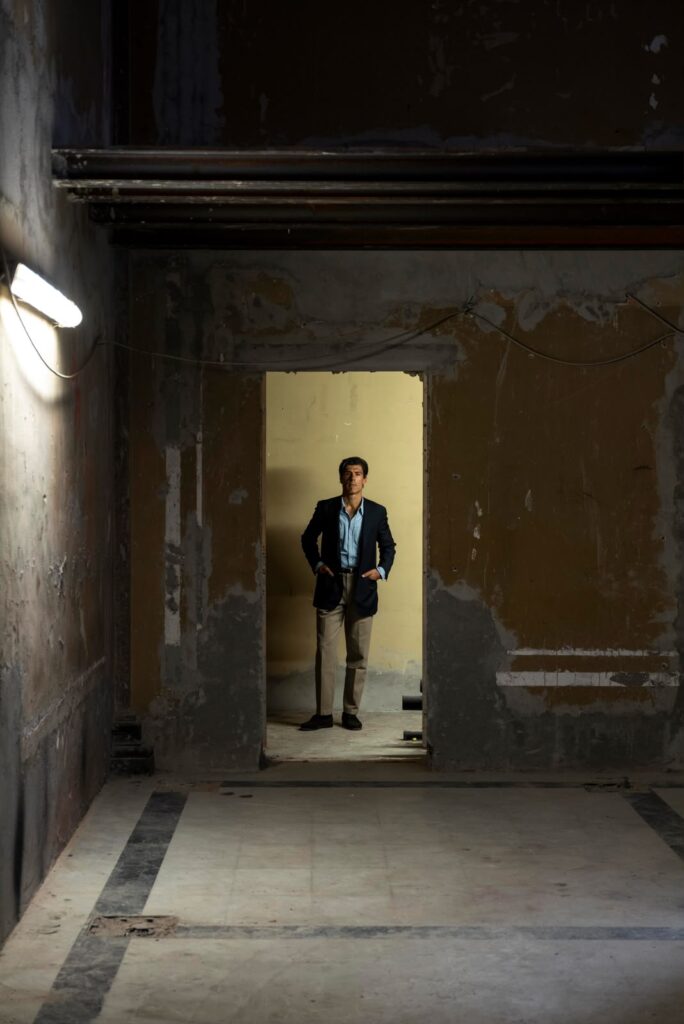
Images Courtesy of Edourdo Follo
Edoardo at Home
After palazzi, bunkers, Soprintendenze and urban regeneration, we ask a much simpler question.
Where are we likely to find Edoardo Follo in the evening?
The answer comes immediately.
At home. In the kitchen.
Like so many Italian families, the kitchen is the hub of the house.
It is where he spends his evenings with his wife and their two young children, aged four and seven.
And his own home, interestingly, is very far from the sort of immaculate architectural showroom one might expect from a man who spends his professional life thinking about interiors and buildings.
It is lived in.
What Follo likes most about it is its dynamism.
The house has changed with them.
It has evolved through different phases of family life; adapted to children, routines and the ordinary realities of living; and continued changing rather than remaining fixed at the moment it was designed.
For a man whose professional life is spent deciding how old buildings might evolve without losing themselves, there is something rather fitting about that.
Perhaps this, in the end, is what Edoardo Follo means when he talks about giving buildings another life.
It is not simply about marble.
Or courtyards.
Or restoration.
Or even architecture.
A building is revived when people return to it.
When the front door opens.
When the lights come on.
When somebody ends the day in the kitchen.
And when a place that had fallen silent becomes part of the life of a city once again.