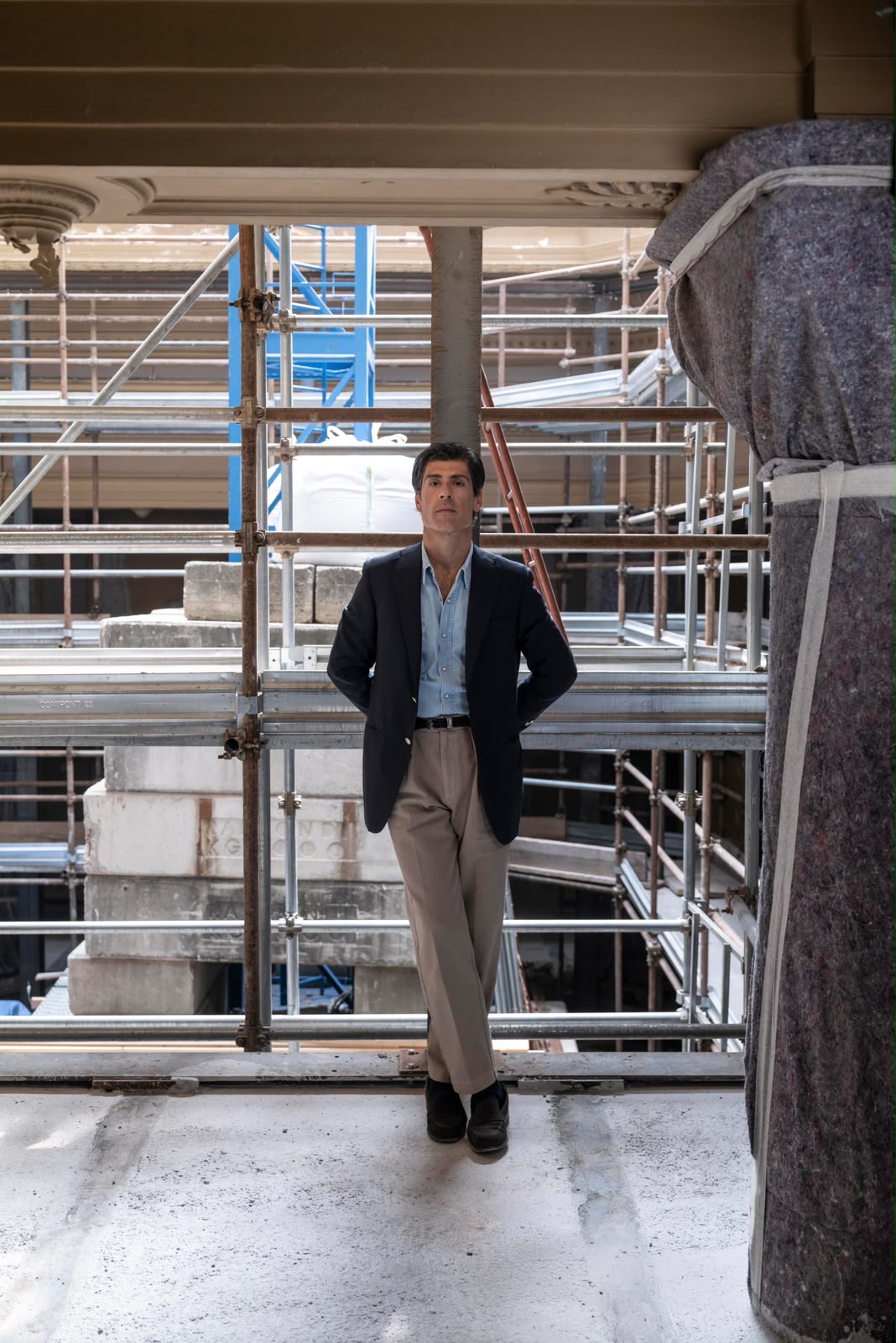
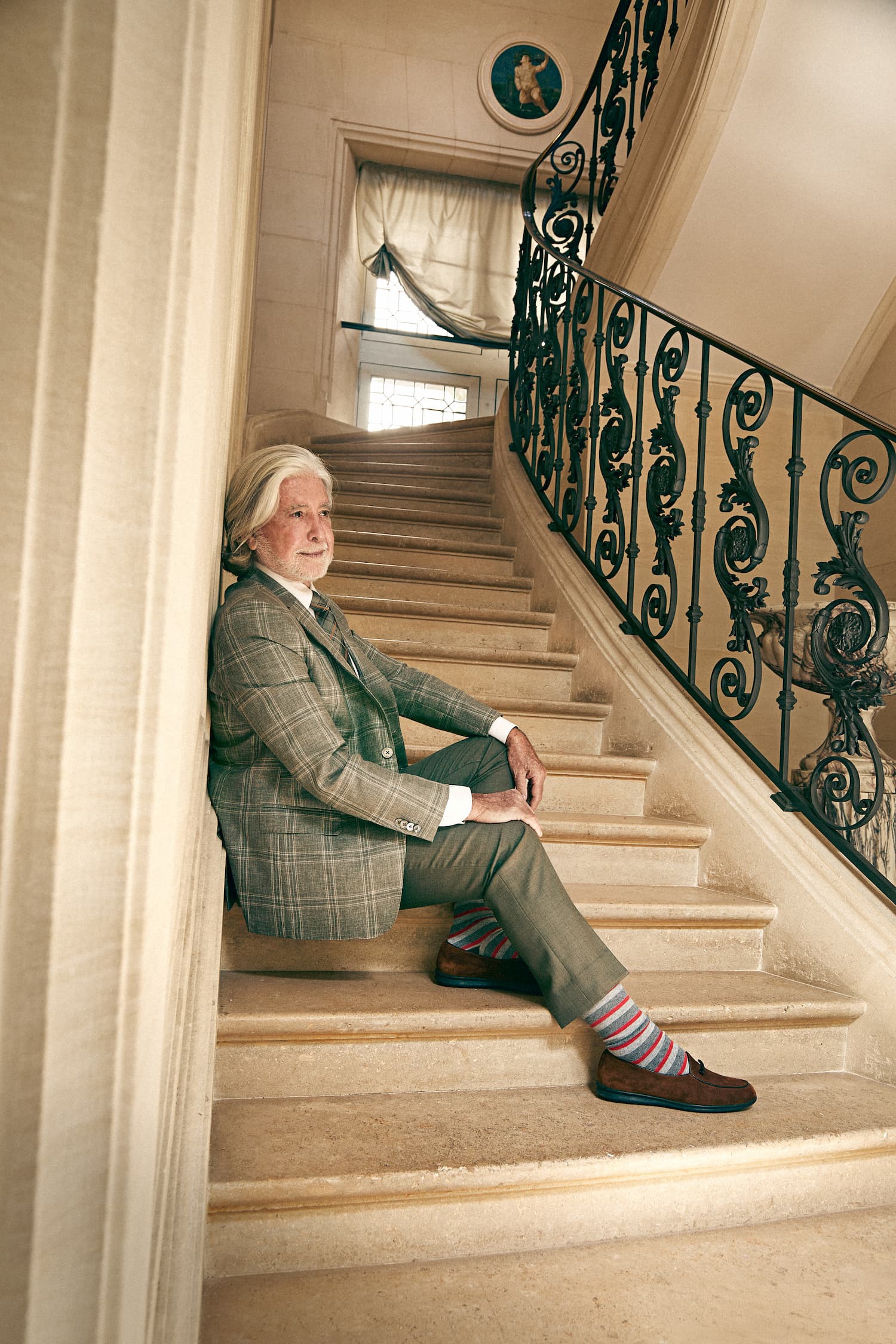
Juan Pablo Molyneux at Hotel Claude Passart ©Mattia Aquila
There are interior designers whose work belongs unmistakably to a decade, and others whose rooms seem to exist rather splendidly outside time. Juan Pablo Molyneux belongs to the latter.
For more than half a century, the Chilean-born architect and interior designer has created some of the world’s most remarkable interiors. His is a world of architecture and decorative arts, of craftsmen and collectors, of rooms assembled not according to fashion but through an understanding of history, proportion and the particular lives of the people who will inhabit them.
It is also a world in which beauty need not apologise for itself.
Molyneux’s career has taken him from Latin America to New York and Paris, and into private houses and historic buildings across the world. His major commissions include the Pavilion of Treaties in St Petersburg, the Russian rooms at the Palais des Nations in Geneva, Château Mukhrani in Georgia and the Cercle de l’Union Interalliée in Paris, in Doha he designed a 40,000 square foot palace for Sheikh Mohamed Bin Suhaim Al Thani, alongside other private residences internationally.
France made him a Chevalier des Arts et des Lettres in 2004.
Yet speaking to Molyneux, one has the impression that all of this began rather simply: with a small boy who liked to build things.
There appears never to have been a great moment of indecision about what he would become.
“In a certain way, it was always in my thoughts, in my mind,” he tells Blue Ribbons & Lace. “I was a little child building things, so it has been my entire life. I never tried anything else.”
He went through school unusually young and entered university to study architecture at sixteen.
“They made an exception for me,” he says. “I would say architecture and building have been in my DNA. It has never been different.”
An Open Door
From Latin America came New York, the city that would become instrumental in Molyneux’s international career.
Ask what New York gave him and his answer is immediate.
“New York is an open door.”
It is an unexpectedly simple description of a city that has launched so many complicated careers.
“It depends on the person. New York enables you to see the world. All the greats have, at one point, been in New York. New York is a door which is open — you can go back and forth. It is amazing.”
What followed was a career spent inside exceptional houses and among people able to commission almost anything. Yet Molyneux speaks about his clients less as patrons than as another source of education.
“This field I am in, this career, is a learning experience from the moment you wake up until you sleep.”
The education, he says, comes from everywhere.
“I learn from all my sources — vendors, connoisseurs and collaborators. The clients teach you unwittingly. The clients have their fantasies, philosophy and intelligence, so to speak, and then I have to build that interpretation.”
That last word is important.
Molyneux does not describe imposing a formula upon a house. The work is an interpretation: of architecture, of objects, and inevitably of the person who will live among them.
There is nevertheless little indecision in the process.
When we ask whether he presents clients with several different possibilities, his answer reveals rather more about the Molyneux method than a lengthy discussion of design philosophy might.
“Usually I give one option.”
It may, he explains, be tweaked or modified.
“But it is like truth. There is only one version. There is no Option B.”
Perhaps that certainty also explains why his interiors have remained so recognisably his own.
They are layered, architectural and frequently exuberant. They are not rooms designed to disappear politely into the background. And at a moment when so much contemporary decoration has retreated towards neutral colours and restraint, Molyneux remains conspicuously uninterested in making everything quiet.
Have we become frightened of beautiful things?
His correction is instantaneous.
“We have become frightened of horrible things.”
He continues: “The neutral colours and décor allow for things to go to sleep. They are safe.”
There is something wonderfully Molyneux about the distinction.
And how does he know when to be bold? How much of that extraordinary eye is intellectual and how much instinct?
“We have control from our brain,” he says, “but sometimes the brain stays behind and the hands take over.”
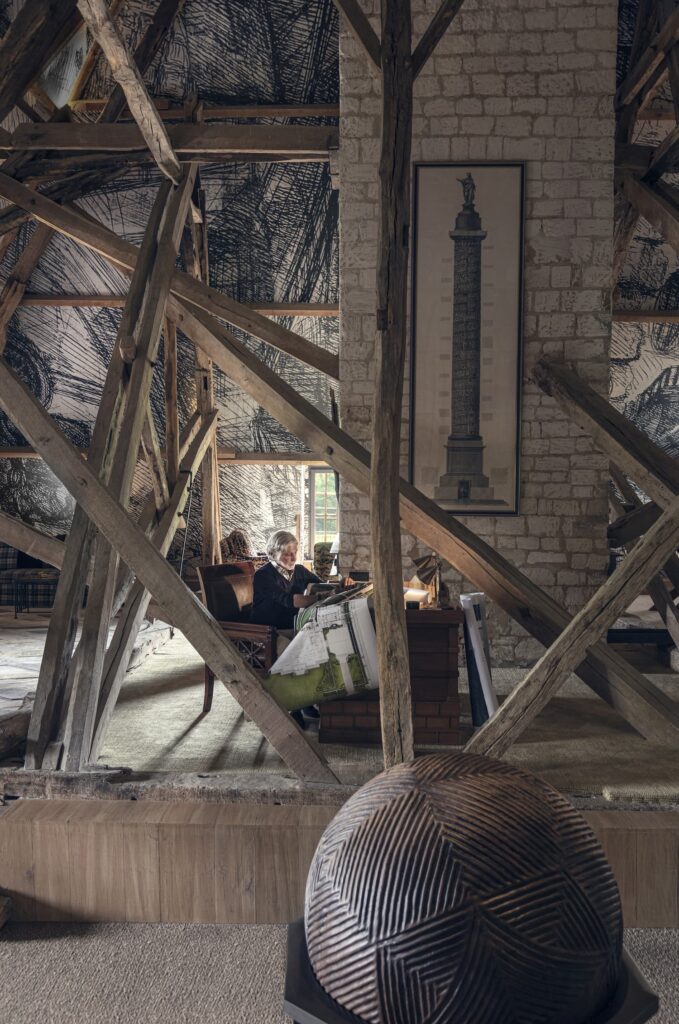
Pouy – JPM Portrait in the attic ©Mattia Aquila
The Hands That Make the Room
Those hands are not always his.
Behind the great interiors are generations of specialist craftsmen: cabinetmakers, gilders, painters, embroiderers, upholsterers and artisans capable of making things that cannot simply be selected from a catalogue.
For Molyneux, their disappearance is not an abstract concern.
“The decorator has a huge responsibility” in keeping savoir-faire alive, he says.
“Craftsmen are becoming thin on the ground. Young people are not interested in taking up these skills, and most choose to make money in a different way.”
But he identifies another part of the problem too: perhaps young craftspeople also need to be offered work sufficiently ambitious to make mastering those skills worthwhile.
“There might also be a lack of exciting new possibilities of work.”
It is an interesting thought from a designer whose career has depended upon precisely those possibilities: extraordinary people being asked to make extraordinary things.
And after a lifetime spent interpreting houses for other people, eventually Molyneux encountered a house that would become profoundly personal.
He first saw Château de Pouy from the air.
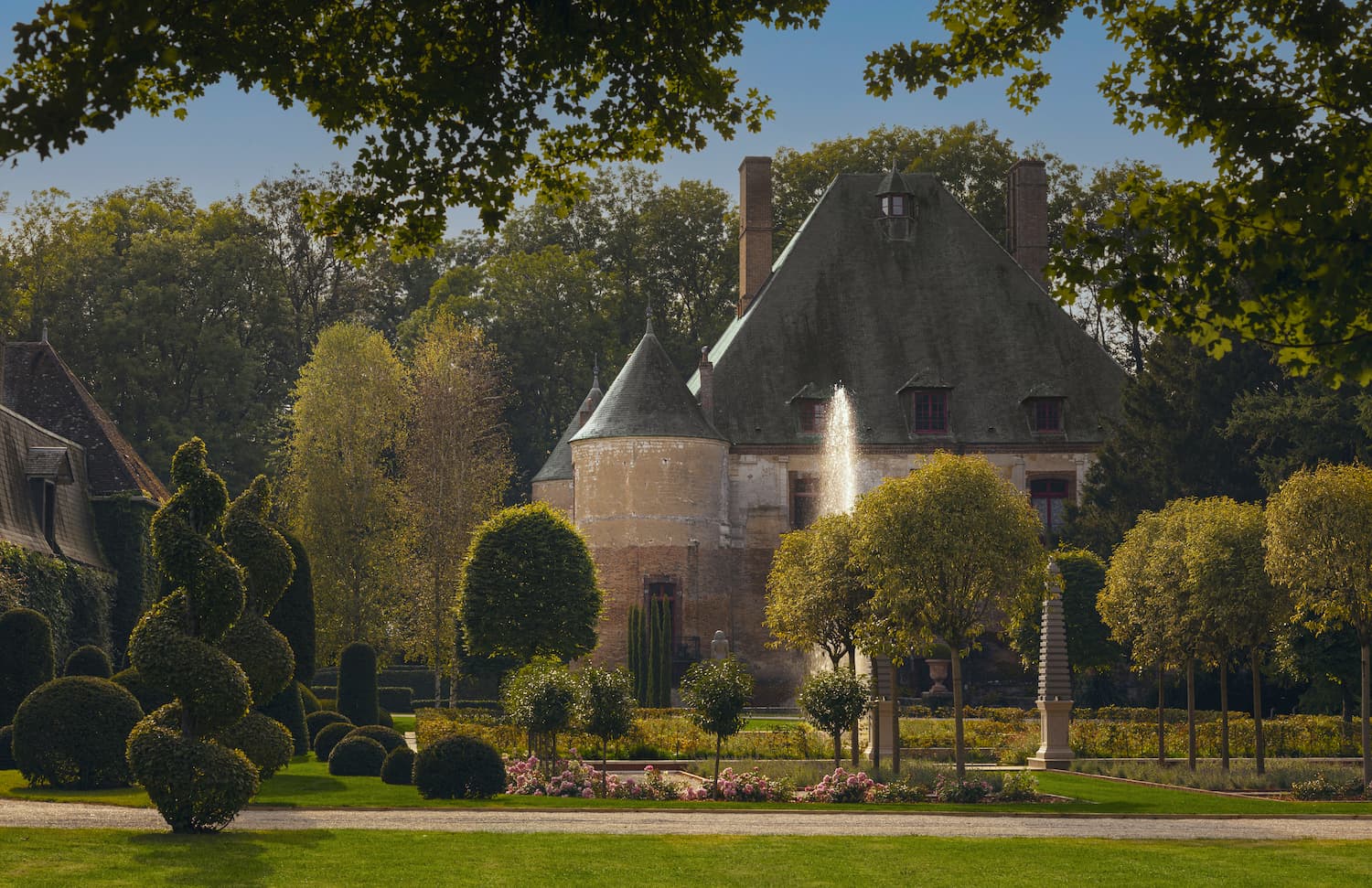
Pouy – Castle Facade East ©Mattia Aquila
Pouy
There was no first arrival through the gates, no cinematic drive towards the façade.
There was a photograph in a magazine.
“I saw an aerial photograph of the château,” he remembers.
“I measured it with my eyes.”
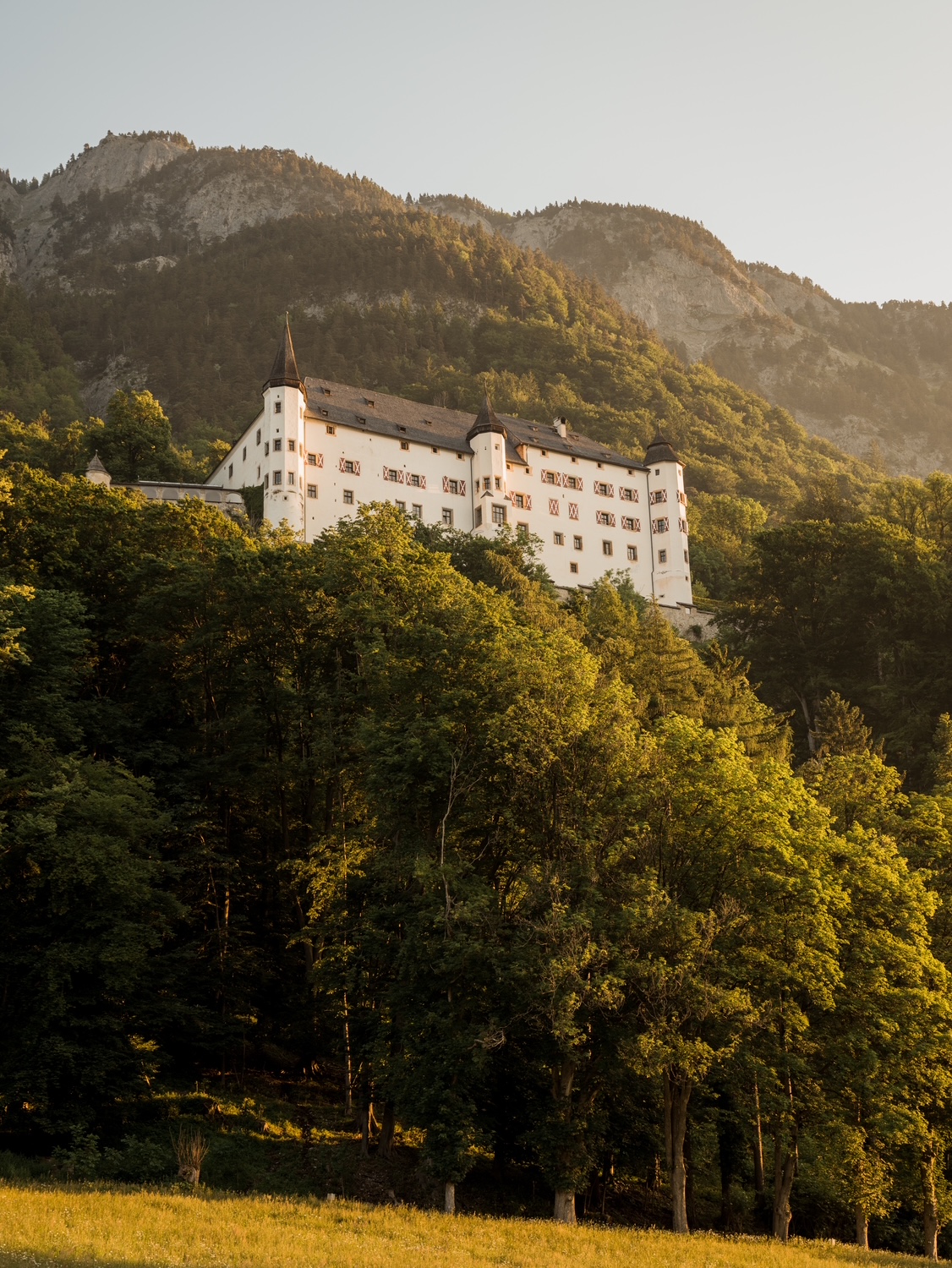
The building was not exactly what he had imagined he was looking for. But there was something difficult to resist: an ancient château, conceived around a medieval square, four towers at its corners and forest surrounding it.
“All the magic forest,” as Molyneux remembers it.
He decided to pursue the property.
It had been sold.
And for most prospective buyers, that would have been the end of the story.
A year passed.
Molyneux eventually asked his personal assistant to telephone the same estate agent and find out what else might have appeared on the market.
The château, extraordinarily, was available again.
This time he went to see it.
The rest, as he says, is history.
What is striking is the speed with which the man who had spent decades making decisions about other people’s houses made them about his own.
Pouy was completed in one year and seven months.
Molyneux is quick to make decisions. Perhaps a man who believes there is no Option B was never likely to spend five years wondering which direction to take.
But the ambition at Pouy was not simply grandeur.
It was comfort.
Central heating mattered. So did places to read and write, rooms in which to spend time with friends, and spaces made for entertaining.
The château had originally contained seventeen bedrooms.
Molyneux reorganised it to have five.
It is a small detail that tells us rather a lot about the difference between preserving the idea of a château and actually living in one. Pouy was not being prepared for observation. It was being made into a home.
Molyneux spends as much time there as his life permits, particularly at weekends, and speaks of the place with unmistakable affection.
The house is now the subject of his forthcoming book, Juan Pablo Molyneux: A Château for All Seasons, published by Flammarion on 3 November 2026, with Jérôme Hanover and photography by Mattia Aquila.
The seasons are not merely a convenient title. The book follows the château through its different guises across the year — the same architecture acquiring another character as the landscape, light and rhythms of life around it change.
The Other France
Pouy also brought Molyneux into a part of France that rarely announces itself as loudly as Paris, Provence or the Loire.
The château stands at Pouy-sur-Vannes in the Aube, within the Grand Est — a region of particular interest to Blue Ribbons & Lace.
Molyneux came to know it gradually.
He discovered the landscape, but also the people and the particular rhythm of a less obvious France.
It is, he says, “a less obvious part of France, but many would say the more authentic.”
Perhaps that is part of Pouy’s attraction.
After a career that has moved through some of the world’s great cities and grandest interiors, there is something rather appealing about finding oneself in a corner of France that still has the capacity to surprise.
And yet our conversation ultimately returns not to Pouy, nor to New York, nor even to decoration, but to houses themselves.
After a lifetime spent creating them, what makes one unforgettable?
Molyneux’s answer has little to do with the objects inside it.
For all the grandeur associated with his work, Molyneux’s final thought is remarkably simple.
A house should remain alive.
“An open book,” he says, “a different story for every custodian.”
It is a fitting idea from a man who has spent his life creating rooms of great conviction, while understanding that no house truly belongs to one moment — or to one person.