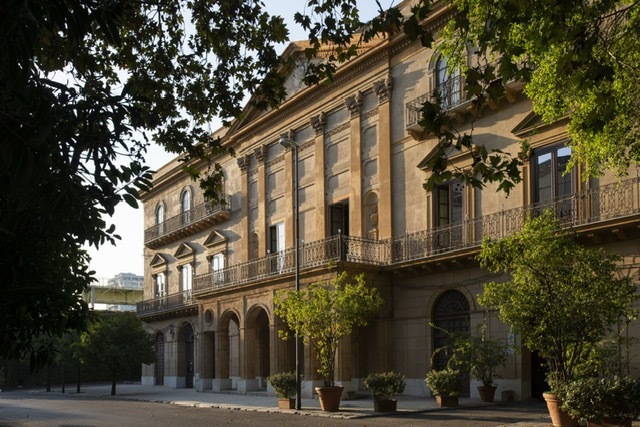
Palazzo De Gregorio: The Living Heart of Palermo
By Blue Ribbons and Lace
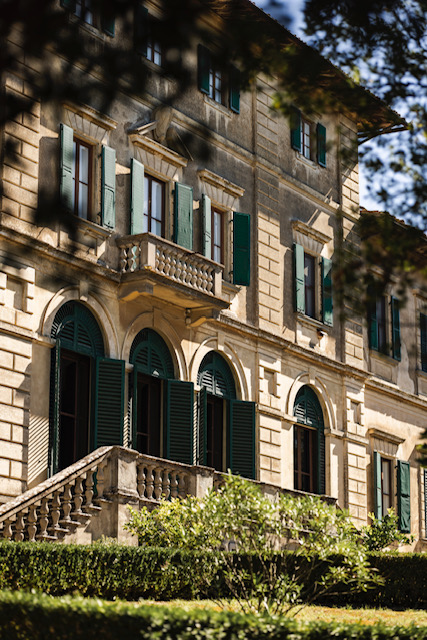
In Palermo, where aristocratic history still lingers behind faded façades and heavy wooden doors, Palazzo De Gregorio remains not merely preserved, but inhabited — a living continuation of Sicilian memory.
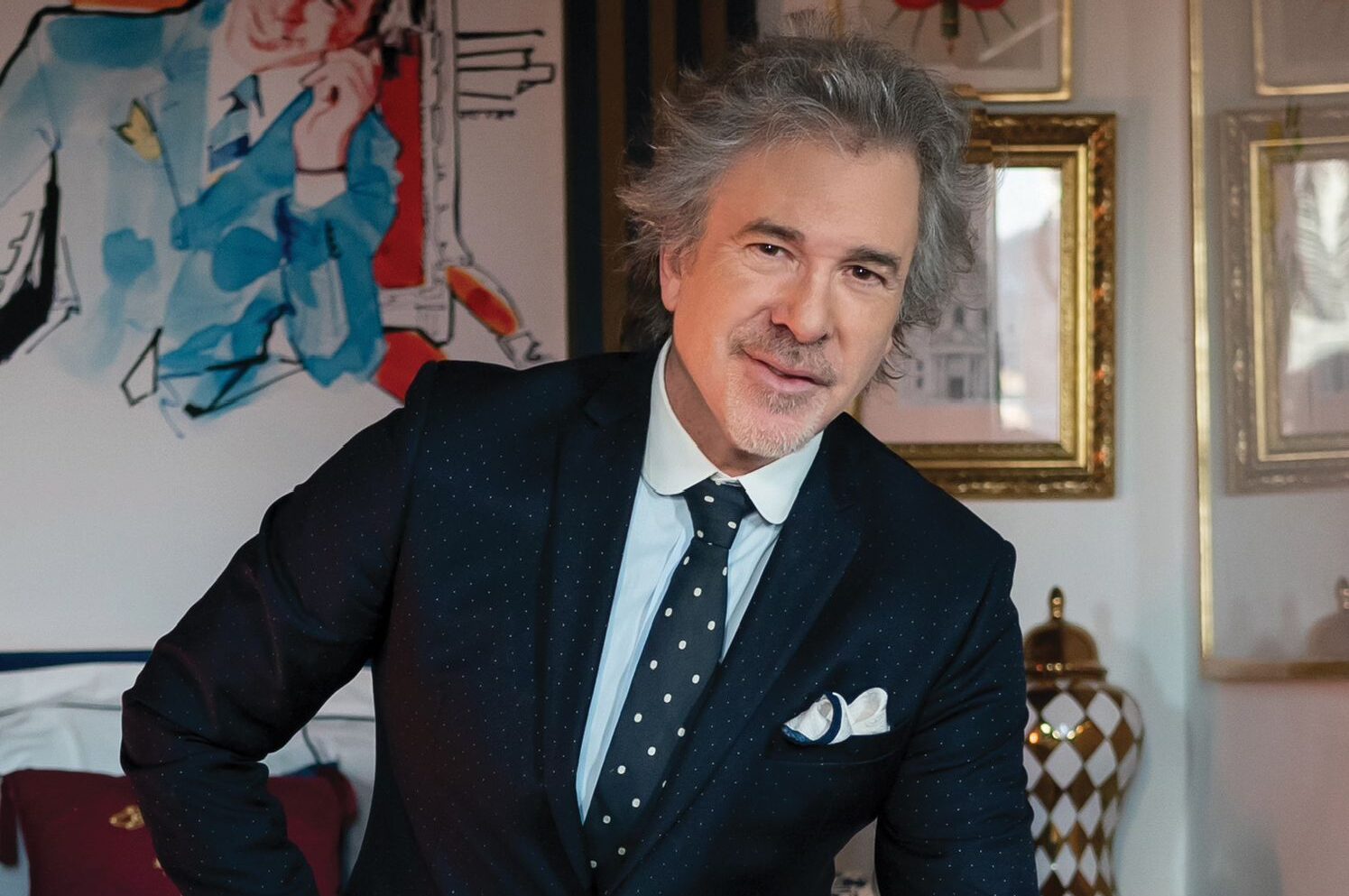
For generations, the De Gregorio family has guarded the palazzo’s salons, stories, rituals and atmosphere. Today, Principe Antonio de Gregorio continues that stewardship, welcoming guests into rooms layered with music, diplomacy, hospitality and family history.
Antonio grew up surrounded by centuries of family memories. After studying at Milan’s renowned Bocconi University and spending more than twenty-two years in the corporate world, he recently chose to devote himself entirely to the management and preservation of the family properties.
In conversation with Blue Ribbons & Lace, he reflects on inheritance, Palermo, hospitality and the delicate balance between honouring the past while preparing for the future.
A Living Family Home
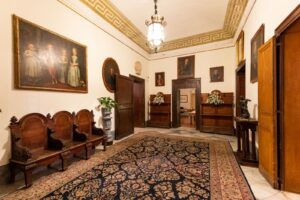
Unlike many great European residences that have become museums, Palazzo De Gregorio remains first and foremost a family home.
“That is perhaps what makes people feel something when they arrive,” Antonio explains. “They are not entering a museum. They are entering a real palazzo, inhabited by the family itself.”
Antonio’s childhood unfolded among grand salons, hidden corridors and generations of family stories. Together with his sister, he transformed the palace into an endless playground, racing through rooms while their grandmother looked on with understandable apprehension, fearful that one of the family’s treasured objects might not survive their adventures.
By the age of sixteen, life had become quieter. Following family circumstances, it was only Antonio and his grandfather living in the palazzo. Yet even then, the house remained full of life.
With a smile, Antonio recalls occasionally organising gatherings for friends — discreetly and not always with his grandfather’s knowledge.
“Fortunately,” he laughs, “he never discovered everything.”
A Legacy Stretching Across Centuries
Few houses in Palermo reflect the city’s history so completely.
Before entering the De Gregorio family in 1792, the palazzo belonged to several noble families, among them the celebrated Princes of Lampedusa. Since Giovanni Carmelo De Gregorio acquired the residence, successive generations have considered themselves custodians rather than owners.
Antonio speaks about the responsibility with remarkable humility.
He often repeats a phrase that has become something of a personal philosophy:
“Only by understanding history can we understand who we are and where we are going.”
For him, history is not something frozen in the past. Instead, it serves as a guide for the present.
“I never feel disconnected from those who came before us,” he explains. “But at the same time, we must understand how society evolves and what future generations will need.”
This philosophy influences every decision he makes.
Respecting the Palazzo
Listening to Antonio speak, one quickly understands that he almost regards Palazzo De Gregorio as a living being.
“There must always be respect,” he says.
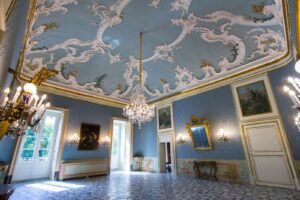
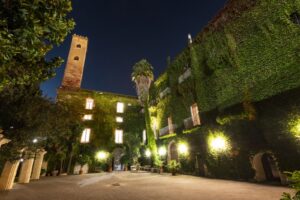
In recent years, extensive restoration work has been undertaken, including the roofs, the exterior façade and the magnificent principal ballroom. Assisted by specialised experts, the ballroom has been restored with extraordinary attention to historical accuracy, recreating the atmosphere it possessed during the eighteenth century.
Every intervention is approached with caution.
Nothing is altered thoughtlessly. Nothing is restored without understanding its history.
The palazzo itself dictates the pace.
Hidden Memories
When asked whether there is one place within the house that carries special emotional significance, Antonio reveals a secret known only to a few.
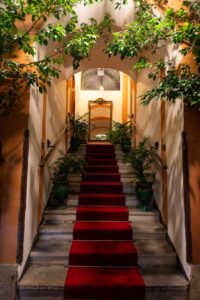
Behind what appears to be an ordinary door lies a concealed staircase connecting the first and second floors.
“It is one of my favourite places,” he says.
Invisible to most visitors, this hidden passage has quietly linked generations of family life for centuries.
It is perhaps the perfect symbol of Palazzo De Gregorio itself: full of stories waiting to be discovered.
Objects That Tell Stories
The treasures preserved within the palazzo are not merely decorative objects but witnesses to history.
Among the pieces closest to Antonio’s heart is a sculpture by the celebrated Sicilian artist Mario Rutelli, an uncle of his grandfather.
Elsewhere, visitors encounter reminders of extraordinary chapters of European history.
Richard Wagner spent time within the family’s circle during his stay in Palermo, and the piano preserved within the house is linked to the period in which the composer worked on Parsifal.
Another treasured object is the telescope once belonging to Admiral Lord Nelson, gifted to an ancestor also named Antonio De Gregorio.
And throughout the palazzo are reminders of the Brunaccini family, from whom the title of Prince passed to the De Gregorio line.
Yet perhaps one of the most remarkable ancestors was Antonio De Gregorio himself — a distinguished naturalist, scholar and pioneer photographer. One of Europe’s respected intellectual figures of his era, he combined scientific curiosity with artistic sensitivity, leaving behind a legacy that reflected both modernity and culture.
In many ways, his spirit of observation and openness to innovation still resonates within the family.
The Art of Sicilian Hospitality
Antonio believes that Sicilian hospitality remains unlike anything else in Italy.
“There is something deeply human about it,” he says.
In the 1990s, Palazzo De Gregorio became one of the first historic residences in Palermo to open its doors for weddings and celebrations.
For Antonio, hospitality is not simply a business model.
“It is a continuation of a tradition.”
Today, he hopes guests leave with something far more valuable than beautiful photographs.
“I want people to experience what it feels like to live in a real family palazzo.”
Looking ahead, he hopes to create even more immersive experiences, allowing visitors greater access to the rhythms and atmosphere of life within the house.
Corporate Logic and Palermo Logic
After more than twenty-two years in the corporate world, Antonio acknowledges that some aspects of his professional experience have naturally influenced the way he manages the estate.
But, he adds with a smile, success in Palermo also requires something else.
“There is corporate logic — and then there is Palermo logic.”
The combination of the two has allowed him to approach the future pragmatically while remaining faithful to local traditions and family values.
Preserving Memory for the Future
As Palermo evolved during the eighteenth and nineteenth centuries, the city and the palazzo grew together.
Today, Palazzo De Gregorio remains one of the few great houses where history has not been interrupted.
The music may have faded from the ballroom and the carriages disappeared long ago, but life continues behind those doors.
And perhaps that is its greatest achievement.
Not simply surviving.
But continuing.
As generations before him have done, Principe Antonio de Gregorio understands that he is not merely preserving a building.
He is preserving memory itself.
Editor’s Note: Palazzo De Gregorio hosts weddings, private events and celebrations in Palermo, Sicily.