Before the flowers, before the presents, before Christmas itself, there is the quiet pleasure of making the house ready.
There is a particular moment in December when the country house changes.
Christmas has not yet begun. There are no guests in the bedrooms, no presents beneath the tree, no long lunches stretching into the afternoon.
But the house is beginning to anticipate them.
We arrive a few weeks before Christmas with lists in our pockets and far more to do than we remember.
The trees are bare now. The garden has lost almost all its colour. By four in the afternoon, the light has begun to disappear, and the house, closed between visits, is deeply cold.
The first thing we do is open it.
Shutters are pushed back. Curtains are drawn. Windows are opened for ten cold minutes despite everyone’s objections. Doors to rooms that have been closed for weeks are left ajar.
And then the fires are lit.
One in the kitchen first, another in the sitting room.
Gradually, the house begins to wake.
Waking the House
Preparing a country house for Christmas begins with warmth.
Before anything decorative comes out, there are fireplaces to clear, chimneys to check and baskets to fill with logs.
We bring more wood up from the store and stack it beside the fireplaces. Kindling goes into old baskets. Matches are left where people will actually find them.
There should be enough logs that nobody needs to think about them once the house is full.
The radiators are checked.
A reluctant one upstairs needs coaxing back to life.
Another bedroom is warmer than expected.
The old house makes its annual collection of small demands.
There is something reassuring about all of this.
Christmas in the country is beautiful partly because it requires preparation. Warm rooms, fires and candlelight feel different when someone has spent the afternoon making them possible.
The Linen Cupboard
The linen cupboard comes next.
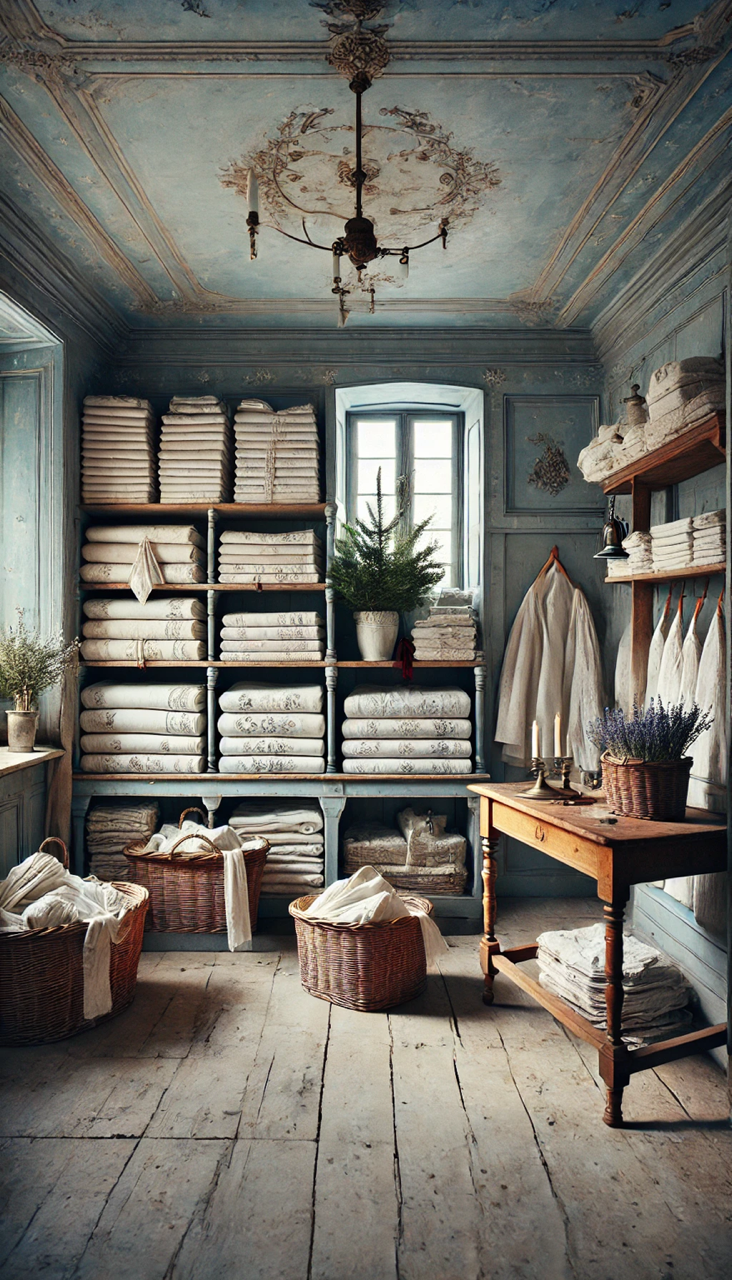
Tablecloths are taken down and unfolded across beds to see which will fit the Christmas table.
Napkins are counted.
Some match.
Many do not.
We decide this does not matter.
There are sheets for the guest rooms, pillowcases edged with embroidery, heavier blankets and the good linen that spends most of the year folded at the back of the cupboard.
Everything that needs airing is aired.
Anything that needs pressing is left in a steadily growing pile.
We find a tablecloth we had forgotten about and immediately decide to use it.
This is often how the Christmas table begins—not with a scheme, but with something rediscovered in a cupboard.
Making Up the Bedrooms
There is a lovely intimacy to preparing a bedroom for someone before they arrive.
Fresh linen.
An extra blanket folded at the end of the bed.
A carafe and glass on the bedside table.
A small lamp checked to make sure it actually works.
We put towels in the bathrooms and make certain there are enough hangers in the wardrobes.
Hot-water bottles are found and placed at the foot of beds.
The rooms that will be used by children acquire extra blankets, books and the inevitable rearrangement of furniture.
Then comes the question that accompanies every family Christmas:
Who is sleeping where?
Names are moved from one room to another.
Someone needs to be downstairs.
Someone else will arrive later.
Two people who were staying for one night are now staying for three.
A room we thought we would not need is suddenly required.
Slowly, everyone finds a place.
The house expands to accommodate them.
The Christmas Cupboard
Before we think about Christmas food, we look at everything that makes Christmas possible around it.
Candles.
Matches.
Ribbon.
Wrapping paper.
String.
Gift tags.
Extra batteries.
We gather them into one cupboard rather than discovering, on Christmas Eve, that the scissors have disappeared again.
Candles are particularly important.
Tall ones for the table. Smaller ones for the sitting room. Spares for bedrooms and windowsills.
Country houses in winter absorb candles at an astonishing rate.
We check the good glasses too.
Not because every glass needs to match, but because there need to be enough of them.
The same goes for plates, serving dishes and cutlery.
Christmas is not the moment to discover that twelve people are coming and there are eleven forks.
Polishing the Silver
One afternoon is given over to silver.
It comes out looking rather less magnificent than memory suggests.
Candlesticks, serving spoons, old trays and pieces that have been in the family for so long that nobody is entirely certain what they were originally intended for.
We polish them at the kitchen table.
It is slow work.
Hands become blackened. Cloths become blacker.
Gradually the dull grey surface disappears and the silver begins to catch the winter light.
Not everything is polished perfectly.
It shouldn’t be.
Old silver is more beautiful when it still looks old.
The candlesticks go onto the dining table even though Christmas is weeks away.
The house has begun to change.
Bringing the Outside In
We do not decorate properly yet.
That comes later.
But December has already given us plenty to bring indoors.
We cut branches from the garden: fir, ivy, laurel and whatever evergreen has survived the cold particularly well.
They are carried inside in untidy armfuls, leaving needles across the hall.
Some branches go into large jars.
Others are laid along mantelpieces to see how they might look.
A wreath begins almost accidentally on the kitchen table.
Nothing is finished.
That is part of the pleasure.
The house should not look as though Christmas arrived in a single afternoon.
It should gather slowly.
A branch here.
A ribbon there.
A bowl of walnuts on a table.
A few candles appearing on a mantelpiece.
The scent of greenery when you walk through the hall.
The Table
At some point, inevitably, we begin talking about the table.
How many will we be?
Where will everyone sit?
Will we use the long table as it is, or add another at the end?
The tablecloth we found in the linen cupboard is brought downstairs.
Plates are put out experimentally.
Candlesticks are moved around.
Then moved again.
We decide against doing too much.
A country Christmas table does not need to be perfect.
Old linen, good glasses, plenty of candles and something cut from the garden are often enough.