The particular pleasure of leaving the city on a Friday afternoon, arriving after dark, and allowing the country house to slowly come back to life.
There is a moment, somewhere after the last busy town and before the road narrows between fields, when the week begins to fall away.
We had left the city later than intended on Friday afternoon. The car was packed without much ceremony: weekend bags, a few books, boots for the woods and several things we had been meaning to bring down to the house for weeks. Traffic followed us for the first hour, then gradually disappeared.
By the time we reached the countryside, the light was beginning to go.
The fields had already been cut. Smoke rose from somewhere beyond a line of trees, and the villages we passed through seemed to be settling in for the evening. Shutters were closing. Lamps were appearing behind windows.
We arrived in darkness.
Opening a country house after an absence has its own little ritual. Bags are abandoned in the hall. Lamps are switched on one by one. Curtains are drawn. Someone goes immediately to make the fires while someone else opens the kitchen and begins looking through cupboards.
The house was cold enough for two fires that evening: one in the kitchen and another in the sitting room.
There was no thought of cooking properly.
We put a wooden board on the kitchen table with saucisson, pâté, cornichons and a piece of Comté. There was bread from the last village we had passed through and a bottle of red wine opened while the fire began to catch.
It was exactly what we wanted.
Perhaps this is one of the great luxuries of the country: not abundance, but simplicity at precisely the right moment.
We ate beside the fire, still wearing the jumpers we had travelled in, talking about what needed doing the following morning.
There were cupboards to fill.
And autumn had properly arrived.
Saturday Morning
The house looked entirely different in daylight.
Mist sat low over the fields and the windows were clouded slightly at their edges. Outside, the garden had begun its slow retreat towards winter. Inside, the kitchen felt warm from the night before.
Coffee was made. Bread was toasted directly on the range.
Then we took baskets and drove into town.
Autumn shopping for a country house is different from ordinary shopping. It is less about what will be eaten that day and more about what one wants to find in the cupboard on a cold evening three weeks later.
The pantry had been rather neglected over the summer, so this was a morning for putting it back in order.
We bought flour and sugar in paper bags; walnuts and hazelnuts; rice and good pasta; tins of sardines and anchovies; jars of mustard and cornichons; chestnut purée; honey; dried morels and other woodland mushrooms; fruit preserves; dark chocolate for cooking.
There were cheeses to take home, saucisson to hang in the pantry, country ham wrapped in paper and several bottles of red and white wine for the weeks ahead.
Butter too. More than seemed immediately necessary.
A country kitchen should always have butter.
Back at the house, everything was unpacked slowly.
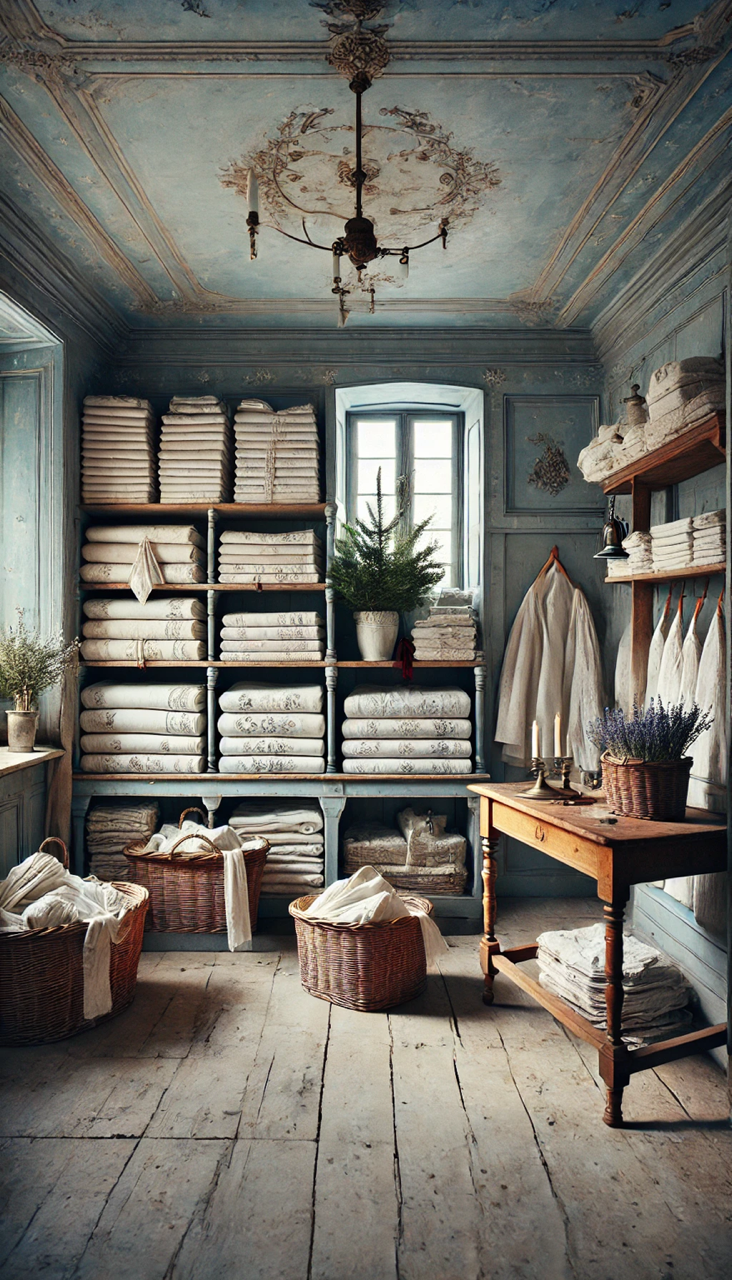
Jars went onto shelves. Wine disappeared into the cool darkness below stairs. Flour was tipped into its tin. Nuts filled glass jars. The dried mushrooms were put away for future suppers. Cheeses were wrapped and the ham placed somewhere cool.
By lunchtime, the pantry looked reassuring again.
There is something deeply satisfying about a well-stocked country cupboard in autumn. It suggests that whatever the weather chooses to do outside, something good can always be put on the table.
Lunch from the Pantry
By then, nobody wanted to cook very much.
We cut thick slices of yesterday’s country bread, rubbed them with a little garlic and covered them with slices of Comté. They went beneath the grill just long enough for the cheese to melt and begin to brown at the edges.
A few folds of country ham were added afterwards, with cornichons alongside.
That was lunch.
Hot tartines on old plates, a jar of mustard left open on the table and a bottle of light red wine between us.
We finished with a little more cheese and spoonfuls of fruit preserve.
It was the first meal made from the newly filled cupboards, and perhaps because of that it felt disproportionately satisfying.
Into the Woods
Later that afternoon we went out with friends to look for truffles.
Truffle hunting is wonderfully deceptive. For long stretches, almost nothing appears to be happening.
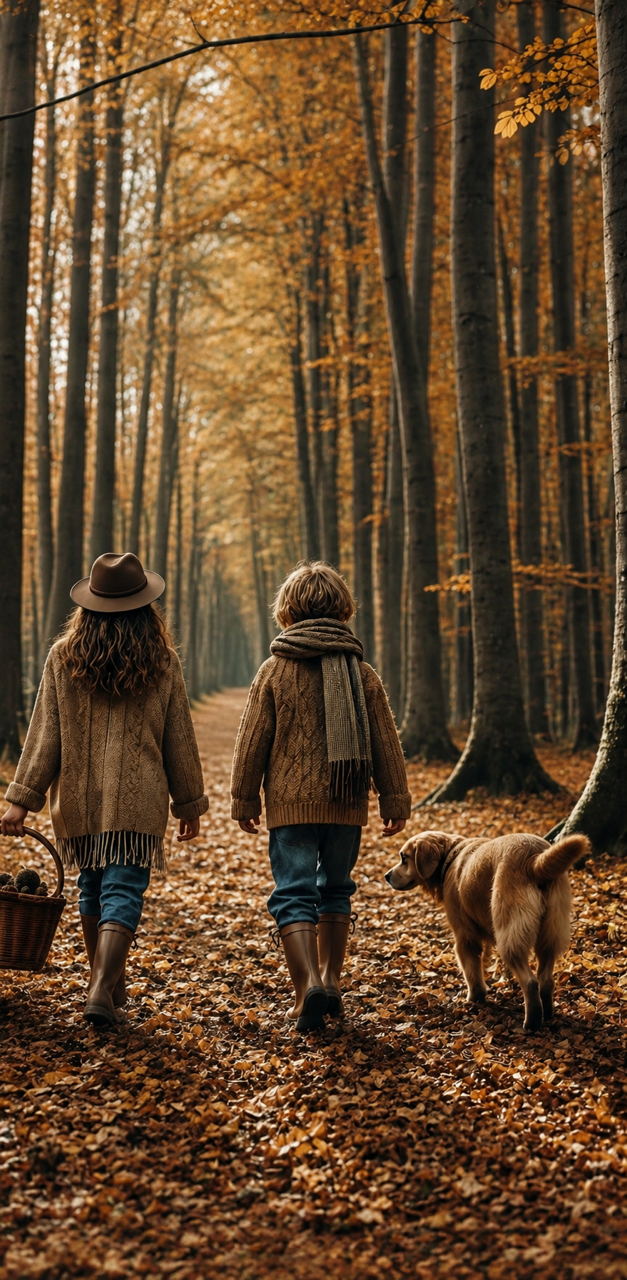
You follow a dog through woodland. Leaves crack beneath your boots. Someone points out the particular trees beneath which truffles like to grow. Everyone watches the dog with an attention normally reserved for far more important matters.
And then suddenly the earth is being scratched away.
The first truffle appeared almost improbably from the soil: dark, knobbled and carrying that extraordinary scent which seems much too powerful for something so small.
We found only a few.
That made them feel more precious.
Back at the house, they were brushed carefully rather than washed. One was set aside for supper. Another was wrapped and stored for the following days.
Truffles are not really something one needs to improve.
They need eggs, butter, potatoes, pasta perhaps.
And restraint.
Putting Autumn Away
The rest of the afternoon was spent in the kitchen.
There was fruit waiting to be preserved: pears and the last of the season’s figs.
Preserving fruit always feels slightly old-fashioned, which is part of its pleasure. A pan bubbles quietly on the stove while other things happen around it. Jars are washed and warmed. Labels are written.
We made pears poached in red wine with cinnamon and orange peel, packing them into jars with their dark ruby syrup.
The figs were cooked more simply with sugar and lemon until glossy and thick.
One jar was opened almost immediately.
The others went into the pantry.
That is the contradiction of preserving: half the pleasure is preparing something for months from now, and the other half is being unable to resist it that evening.
Friends for Supper
By six, the light had disappeared again.
The fire was lit in the dining room and candles were placed along the table. Nothing elaborate: linen, old plates, small glasses and branches clipped from the garden.
Friends arrived carrying wine and a loaf of bread still warm from the bakery.
Supper began in the kitchen.
We made oeufs brouillés aux truffes — softly scrambled eggs with the truffle we had found that afternoon.
The eggs were cooked very slowly with butter until barely set, spooned onto toasted country bread and finished with thin shavings of truffle.
Afterwards came chicken with morels and cream.
Morels — morilles — are the small, honeycombed wild mushrooms so prized in French cooking. Their flavour is deep and woodland-like, and dried morels are particularly useful in a country pantry: a small jar can wait quietly on a shelf until an evening such as this one.
We soaked them in warm water while the chicken browned in butter. Shallots followed, then white wine and a little of the strained mushroom liquor. The morels went back into the pan and, towards the end, crème fraîche, until everything had become dark, fragrant and silky.
We served it with a gratin dauphinois, its top deeply golden from the oven.
Nothing green was required.
For pudding, there were the pears we had preserved that afternoon, served still slightly warm with crème fraîche.
We stayed at the table long after supper had finished.
Eventually someone carried another log to the fire. The empty plates remained where they were. Wine was poured again.
Outside, the countryside was completely dark.
Sunday
Sunday morning was quiet.
There were coffee cups beside the fire and yesterday’s bread toasted for breakfast with butter and the fig preserve we had made.
The kitchen bore the gentle evidence of the night before: glasses waiting beside the sink, a serving dish left on the table, candle wax hardened into pale rivers.
Nobody seemed in a hurry to clear it.
Later, before leaving, we walked through the house closing shutters and checking fires.
A few jars remained lined up in the pantry.
The wine rack was fuller.
There was pasta, rice, nuts, preserves and tins on the shelves; dried morels waiting for another supper; cheese wrapped away; saucisson hanging in the cool pantry.
Small provisions against the colder months ahead.
Then the bags went back into the car.
The house was locked.
And we drove towards the city again.
Perhaps that is why an autumn weekend in the country feels particularly precious. Summer asks us to stay outside, to make plans, to fill long days.
Autumn asks for something quieter.
A fire.
A stocked pantry.
Something good simmering on the stove.
And friends arriving just as the light begins to fade.