The most memorable wedding menus are not simply served. They unfold.
There is a particular moment at a wedding when the room changes.
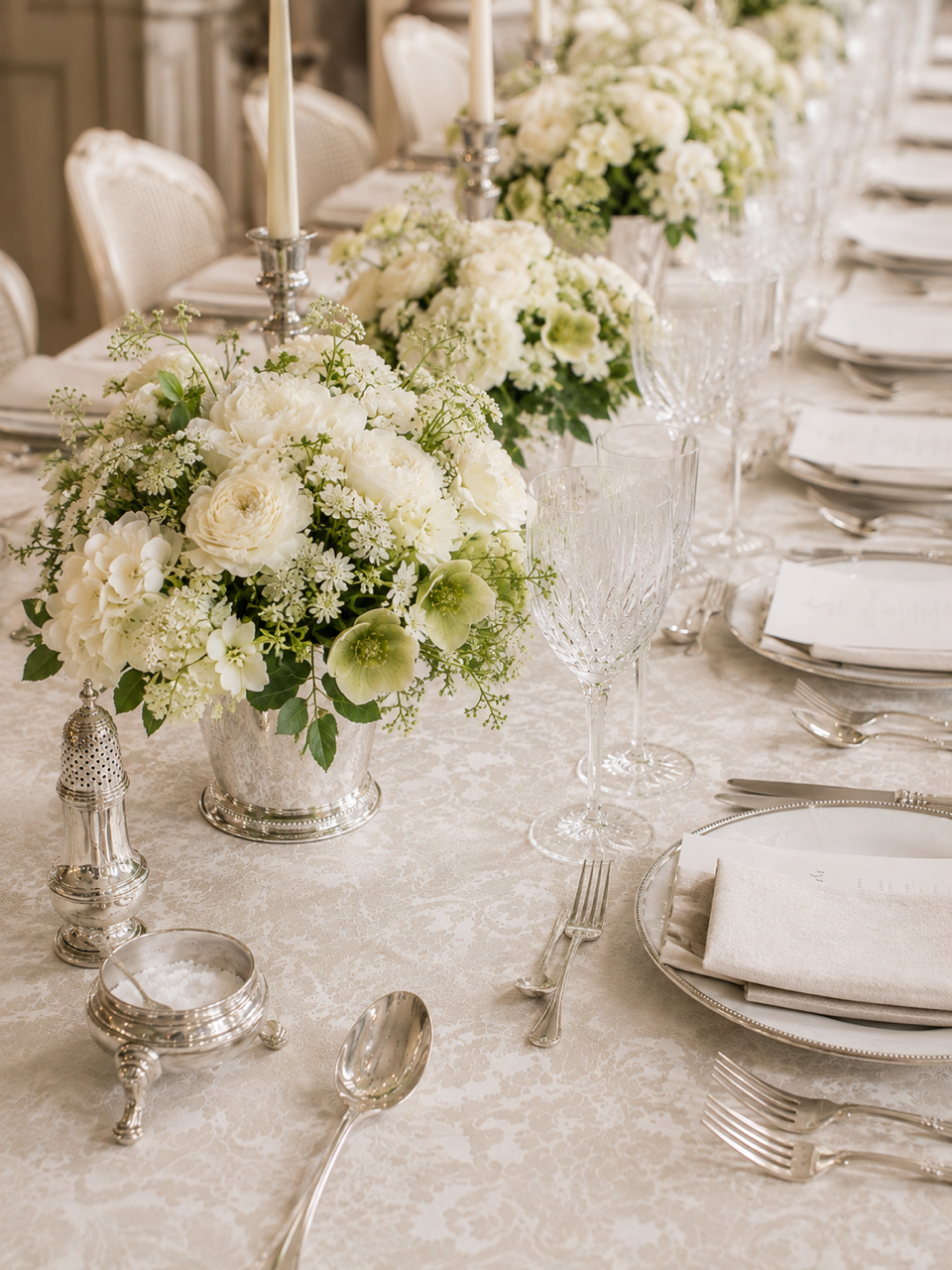
The ceremony has passed, the photographs have been taken, and everyone has found their place at the table. Candlelight catches the rims of glasses. Linen falls softly beneath scattered flowers. A bottle is opened somewhere just out of sight. Conversation becomes warmer, shoulders relax, and the celebration begins to feel less like an occasion being observed and more like a memory being made.
This is where the wedding menu matters.
Not because it must be extravagant, nor because every plate needs to astonish. Quite the opposite. The loveliest menus have an ease about them: a beautiful ingredient at its best, a progression that feels instinctive, wines chosen with thought, and just enough ceremony to make dinner feel different from every other dinner that came before it.
Think of the meal as a story in courses. Begin brightly. Allow the table to become more generous as evening settles in. Finish with something romantic and familiar, then bring out Champagne once more when no one is quite ready for the night to end.
For a late-spring or summer celebration, we imagine something like this.
THE WEDDING MENU
To Begin
Champagne & Gougères
Warm Comté gougères
Radishes with cultured butter and fleur de sel
Green olives with lemon and thyme
In the Glass
Champagne Blanc de Blancs, Brut
Fine, mineral and beautifully chilled, a Blanc de Blancs has precisely the freshness wanted at the beginning of a celebration. Pour it generously, preferably outdoors.
The First Course
Burrata, White Peach & Garden Herbs
Heirloom tomatoes, basil oil, young leaves
a little sea salt and torn basil
In the Glass
Provence Rosé
or
Etna Bianco, Sicily
The rosé makes this feel unmistakably summery; an Etna Bianco brings a more mineral, quietly sophisticated character.
The Fish Course
Wild Sea Bass
Courgette flowers, petits pois, preserved lemon
champagne beurre blanc
In the Glass
White Burgundy — Puligny-Montrachet or Chassagne-Montrachet
A beautifully made Chardonnay has enough freshness for the fish and enough texture for the sauce. This is the wine to linger over.
The Main Course
Herb-Roasted Lamb
Artichokes à la barigoule
rosemary jus, pommes Anna
and a simple salad of bitter leaves
In the Glass
Saint-Julien, Bordeaux
or
Brunello di Montalcino, Tuscany
Bordeaux lends the table an elegant classicism; Brunello brings warmth, perfume and an unmistakably Italian generosity.
The Cheese
A Small French Cheese Course
Brillat-Savarin
aged Comté
fresh figs, walnuts and acacia honey
In the Glass
The remaining red wine from dinner
There is no need to introduce another bottle simply because another course has arrived. Let the wine continue, the candles burn lower and conversation wander.
The Wedding Cake
Elderflower, Lemon & Vanilla
Layers of lemon sponge
elderflower cream
vanilla and fresh raspberries
In the Glass
Demi-Sec Champagne
The slight sweetness of a Demi-Sec is far kinder to wedding cake than a very dry Champagne and turns the final course into something particularly celebratory.
Later
Espresso & Tiny Sweets
Chocolate truffles
pistachio madeleines
strawberries
and slices of wedding cake wrapped for those still dancing
In the Glass
Vintage Champagne
Because sometimes the best reason to open the special bottle is simply that everyone you love is still in the room.
The Art of Making It Your Own
The secret of a beautiful wedding menu is not recreating these dishes exactly. It is understanding the rhythm behind them.
Choose a season first, rather than a theme. Let three or four ingredients recur quietly throughout the meal — perhaps lemon, garden herbs, peaches and roses in summer; pears, mushrooms, hazelnuts and quince in autumn. Repetition creates a subtle sense of coherence without making the menu feel contrived.
Then edit.
One exceptional fish with an exquisite sauce will be remembered more fondly than a plate crowded with ideas. A bowl of perfect strawberries can feel more luxurious than an elaborate dessert. Good bread, salted butter and beautifully dressed leaves deserve as much attention as anything more complicated.
Wine should follow the same philosophy. It is rarely necessary to serve a different wine with every plate. Begin with one excellent Champagne, choose a white and a red that can move gracefully through the meal, and save something special for the cake or the small hours. The result feels generous rather than performative.
And finally, write the menu beautifully.
A small card at each place transforms dinner into an invitation to anticipate what is coming. Keep the language spare: the name of the ingredient, its accompaniment, the wine. There is something wonderfully luxurious about restraint.
A wedding feast does not need a grand château, a brigade of cooks or an impossible collection of vintages to possess this feeling. The same principles work around a table for twenty as beautifully as they do in a room of two hundred.
Start with what is in season. Serve fewer things, better. Chill the Champagne properly. Light more candles than you think you need. Put something delicious on the table before anyone asks for it.
And choose a menu that, years later, might make someone say:
Do you remember what we ate that night?