A Journey Through the Vineyards, Villages & Quiet Elegance of France’s Champagne Country
There is a particular romance to Champagne that begins long before the first cork is drawn.
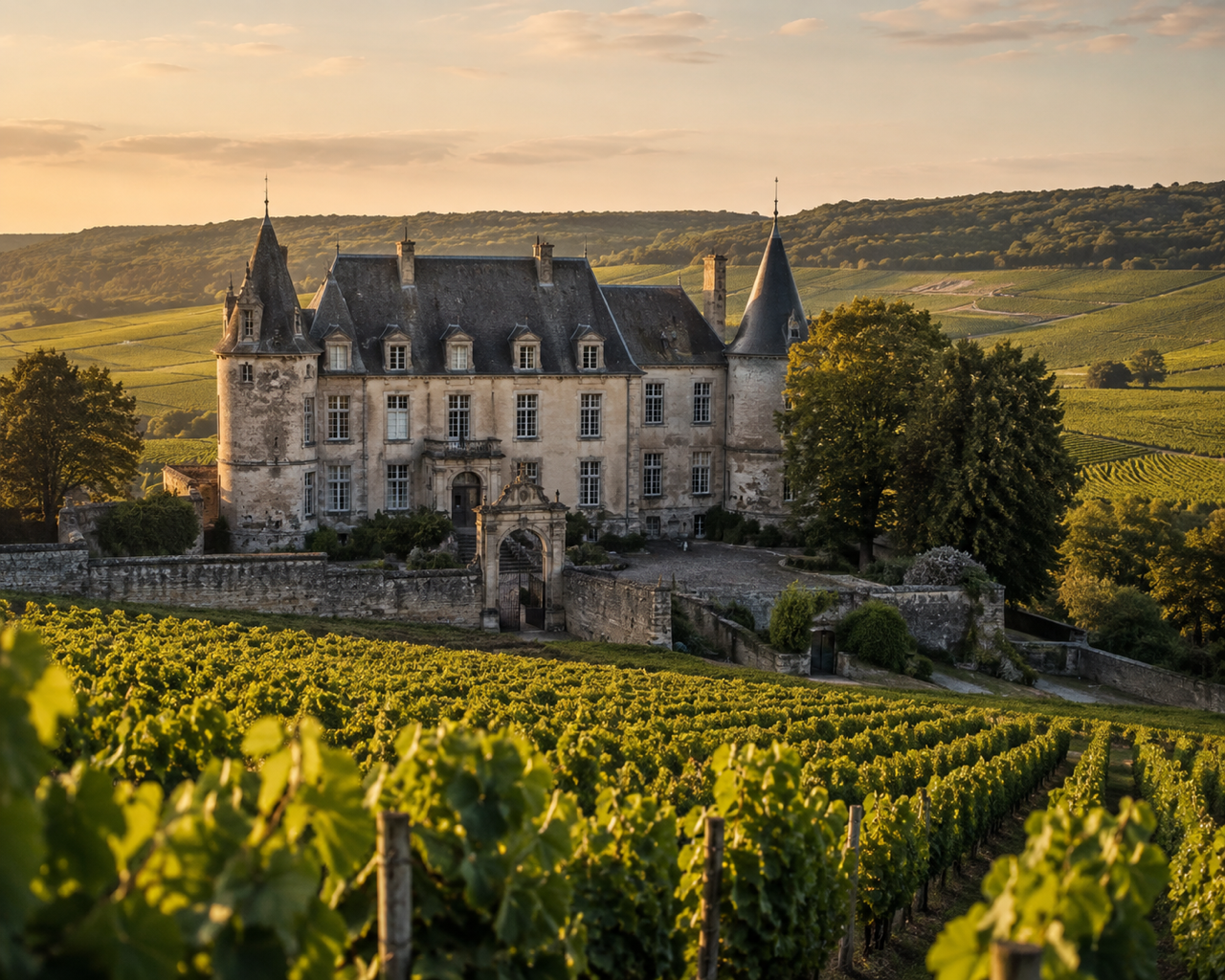
In France’s Grand Est, neat rows of vines sweep across soft chalk hills, church spires rise above honey-coloured villages, and beneath the streets lie miles of cool, silent cellars where bottles rest patiently in the darkness.
Here, Champagne is not simply something poured into a glass.
It is a landscape, a craft and a way of life shaped over centuries.
Reims and Épernay may be its celebrated names, but the beauty of Champagne reveals itself just as readily on the roads between them. Drive beyond the grand maisons and the countryside unfolds slowly: vineyards stitched across the slopes, stone walls warmed by the afternoon sun, handwritten signs leading to family growers and villages where generations have tended the same parcels of vines.
This is a corner of France that rewards curiosity — and, above all, taking your time.
Reims: Grandeur Above & Below Ground
Reims is a fitting place to begin.
At its heart stands the magnificent Notre-Dame de Reims, the Gothic cathedral where generations of French kings were crowned. It is one of those buildings that demands you stop for a moment before entering — soaring, intricate and carrying almost a thousand years of French history within its walls.
Around it, cafés, elegant façades and broad avenues give the city its distinctly French rhythm.
Yet some of Reims’ greatest treasures lie beneath the surface.
Deep underground, ancient chalk cellars — the famous crayères — form extraordinary subterranean worlds. Originally carved into the chalk centuries ago, these cool chambers would eventually prove perfect for ageing Champagne.
Today, descending into them is part history lesson, part theatre.
Long staircases disappear underground. The temperature drops. Bottles stretch into the shadows in seemingly endless rows.
Above ground, the great Champagne houses offer polish and ceremony.
Below, the wine waits.
The Great Maisons — and the Growers
There is something irresistible about visiting one of Champagne’s historic maisons.
Names such as Ruinart, Taittinger, Veuve Clicquot and Pommery are woven into the history of Reims, and visiting their cellars gives an extraordinary sense of the scale, patience and craftsmanship behind bottles recognised throughout the world.
But do not stop with the famous names.
Some of the most memorable experiences in Champagne are found behind much smaller doors.
Across the countryside, independent growers — often families who have worked their vineyards for generations — produce Champagnes that express a particular village, slope or parcel of land.
A tasting here can feel entirely different.
There may be no grand reception room. Instead, perhaps a kitchen table, a small cellar and a conversation with the person who tended the vines you drove past on your way in.
It is here that Champagne begins to feel less like a luxury product and more like what it truly is:
something grown.
Épernay & the Avenue de Champagne
If Reims possesses grandeur, Épernay has an intimacy all its own.
Its celebrated Avenue de Champagne is lined with elegant mansions belonging to some of the region’s historic houses. Beneath the avenue lies another world: kilometre after kilometre of cellars containing millions of bottles slowly maturing underground.
It is tempting to move from tasting to tasting.
Resist.
Champagne rewards a slower pace.
Walk the avenue. Notice the architecture. Stop for lunch. Sit outside with a glass and watch the afternoon unfold.
The pleasure here is not in how many houses can be visited, but in allowing yourself to become part of the rhythm of the place.
Into the Vineyards
And then, leave the cities behind.
The roads curl through vineyards and tiny villages, climbing hills before dropping again towards the Marne.
This is the Champagne that stays with you.
One of its loveliest villages is Hautvillers, perched above the Marne Valley and surrounded by vines. It is closely associated with Dom Pierre Pérignon, the Benedictine monk whose name became forever entwined with the story of Champagne.
But come for more than the history.
Come for the view.
Come for the narrow streets and old houses, the flower-filled corners and the wonderful feeling that the vineyards are never very far away.
From here, continue through the villages of the Montagne de Reims, the Marne Valley or south towards the Côte des Blancs, where Chardonnay dominates the chalky slopes.
There is no need to rush.
Pull over when the view demands it.
Follow the small sign pointing towards a producer you have never heard of.
Sometimes the places you did not plan to visit become the ones you remember most.
Champagne at the Table
Naturally, Champagne is associated with celebration.
But travel through Champagne itself and something rather lovely happens: you stop waiting for a special occasion to drink it.
Here, Champagne belongs to the table.
A crisp Blanc de Blancs might begin lunch. A richer vintage Champagne can accompany the main course. Rosé works beautifully with food. Even the region’s simpler dishes seem somehow transformed when eaten within sight of the vines.
The local table is hearty as well as elegant.
Look for jambon de Reims, the region’s distinctive cooked ham; Chaource, the wonderfully creamy cheese produced nearby; and dishes incorporating the region’s wines and produce.
Then there are the famous pink biscuits — Biscuits Roses de Reims by Maison Fossier — traditionally dipped into Champagne.
It sounds slightly eccentric.
Do it anyway.
The Pleasure of the French Food Shop
Leave room in the car.
Champagne is excellent territory for the sort of food shopping that begins innocently and ends with wondering how everything will fit into the luggage.
Seek out small épiceries, cheesemongers and market stalls.
Bring home mustard from Reims, local honey, preserves, Biscuits Roses, beautiful cheeses and, naturally, bottles discovered along the way.
There is also something particularly enjoyable about buying Champagne directly from a grower.
The bottle becomes more than a souvenir.
Months later, when it is finally opened at home, you remember the road that led there, the cellar, the conversation and perhaps the vineyard you could see through the window.
Where Luxury Is Quiet
The loveliest stays in Champagne understand that the region does not need embellishment.
Think old estates hidden behind gates, château hotels surrounded by vines, pale stone rooms, linen curtains moving at open windows and breakfast taken slowly rather than hurriedly before another day of sightseeing.
There are grand addresses, certainly.
But Champagne’s particular luxury is often found in what is absent.
No rush.
No crowds.
No need for spectacle.
Instead there are long lunches, drives through the vines, afternoon tastings and evenings when the light settles over the countryside and there is nowhere else one particularly needs to be.
The Women Behind Champagne
There is another story threaded through Champagne that is worth discovering.
Women played an extraordinary role in shaping the Champagne we know today.
The great veuves — widows — who took control of Champagne houses after the deaths of their husbands were operating businesses at times when women had remarkably little economic independence.
Perhaps the most famous was Barbe-Nicole Clicquot — Madame Clicquot, who took charge of her husband’s Champagne house while still in her twenties and became one of the most influential figures in the industry.
Then there was Madame Pommery, another formidable widow who took over her Champagne house in the nineteenth century and helped shape its future.
Their stories add another layer to the region.
Behind the labels and beautiful bottles were formidable people — innovators, entrepreneurs, growers and families willing to wait years for the result of their work.
Beyond the Bubbles
Champagne will always be synonymous with celebration.
But travel here and its meaning begins to change.
You remember the coolness of a cellar wall beneath your fingertips.
The view from a vineyard road.
A tiny village glimpsed through an open car window.
Lunch that lasted rather longer than intended.
The sound of glasses on a terrace.
The hands of a grower turning a bottle while explaining a tradition inherited from a parent or grandparent.
Perhaps that is the real pleasure of Champagne.
The bubbles may bring us here.
But it is everything around them — the villages, the vineyards, the food, the families, the craftsmanship and the wonderfully unhurried French way of enjoying it all — that makes us want to return.
And sometime later, back at home, you open one of the bottles you brought with you.
The cork lifts.
The wine catches the light.
And suddenly it is no longer simply Champagne.
It is a little piece of France — and a landscape you know.